0
0

ISLAMABAD: Overcoming emerging challenges would, inter alia, require enhanced global cooperation in the fields of science and technology.
In this context, South-South and Triangular Cooperation in education, research, innovation, capacity building, policy making and infrastructure development is more important than ever before.
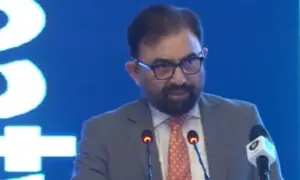
This was highlighted by executive director of the Commission on Science and Technology for Sustainable Development in the South (Comsats) Dr Akhtar Nazir, during a webinar to commemorate the United Nations Day on South-south Cooperation.
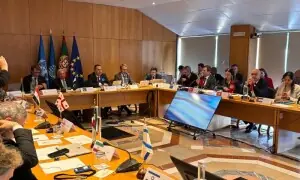
The webinar titled ‘South-South Cooperation: Creating Headways for Post-Pandemic Inclusive Recovery’ included representatives of international and development organisations.
Speakers discuss strategy to cope with post pandemic challenges
They shared their institutional experiences, lessons learnt and suggested practices in implementing S&T programmes through South-South Cooperation.
Participants discussed challenges and strategic approaches in promoting South-South cooperation, as well as recommended means for mainstreaming cooperation mechanisms towards achieving sustainable development goals (SDGs) in the post-pandemic era.
The event had theparticipation of around 80 people from Bangladesh, Benin, Canada, China, Colombia, Egypt, France, Gambia, Iran, Italy, Jordan, Kazakhstan, Kenya, Morocco, Nigeria, Palestine, Pakistan, Sri Lanka, Switzerland, Tanzania, Thailand, Turkey, Uganda, USA, Venezuela, Yemen and Zimbabwe.
Notable speakers included Dr Adel Abdel Latif, director of United Nations Office for South-South Cooperation (UNOSSC), New York; Dr Carlos M Correa, executive director, south centre, Geneva; Prof Ai Likun, assistant executive director, Alliance of International Science Organisations (ANSO), Beijing; Dr Peter McGrath from Inter-Academy Partnership (IAP), Trieste; Prof Mahouton N Hounkonnou, president of Network of African Science Academies, Nairobi; Dr M Sharif, advisor science and technology, Islamic World Educational, Scientific and Cultural Organisation (ICESCO), Rabat and Adnan H. Aliani, director of strategy and programme management division, United Nations Economic and Social Commission for Asia and the Pacific (UNESCAP), Bangkok.
They spoke about challenges and achievements of institutions and associated countries since the onset of Covid-19, policy directions relating to recovery from the disease, dynamics of South-South Cooperation and necessary synergies, importance of STEM education in the developing world for inclusive recovery, the role of academies of science in leveraging South-South Cooperation, and development and implementation of effective S&T programmes for a post-Covid world.
Published in Dawn, October 4th, 2021