21
21


THE recent awareness drive by the National Database and Registration Authority (Nadra) for their ‘Alien Registration; process, through advertisements, on their social media, visits by the prime minister to support the programme, aiming to facilitate “inclusive registration” and “social contact between the state and people”, has left many in stateless communities fearful about the future and protection of their rights.
The greatest impact of the initiation of the alien registration card, without specifically mentioning the same, will be on the Bengali-speaking and Bihari populations, which despite the legal framework in place to protect and grant citizenship, struggle with identity issues due to their ethnicity and language. This programme specifically excludes Afghan nationals and those who have been issued Pakistan Origin Cards.
The Alien Registration Rules, even though on the face of it well-intentioned, fail to take into consideration the ground realities of the communities they primarily aim to facilitate and disregard the provisions of the Pakistan Citizenship Act of 1952 (PCA), creating further challenges in the process of acquiring citizenship. The majority target populations have memories of the creation of the National Alien Registration Authority in 2000. Nara was created with the intention of facilitating people; however, it ended up creating opportunities for discrimination and harassment, and people suffered greatly on this count. The new process makes it mandatory for all previous Nara card holders to register, not considering the forced registrations and the process in place for application of the cancellation of Nara cards issued wrongly. Many Nara card holders have CNICs that have been blocked.
There are harrowing stories of forced registrations and subsequent cancellation or blocking of existing identity documents. This was also the result of the target communities not being empowered, influential and literate. They were vulnerable and unaware of their rights and the protection that the law grants them. It must be appreciated that there has been in the recent past an acceptance by the authorities of the rampant corruption in the department and a willingness to address it in the attempt to ensure systems work properly.
The right to naturalisation should be facilitated.
The PCA provides for birthright citizenship without any conditions. It is a progressive law, with the lawmakers at that time intending to protect the interests of all children born in the country. Subsequently, we have signed numerous international conventions committing to the right of nationality for children. The new process of alien registration in effect deprives children of their right to nationality, a right that is already provided, though in a complex process that not many are aware of.
Amongst the benefits and privileges listed, is the right to education, but only in private schools, which means against a substantial fee. Communities that are living in katchi abadis for the past 50 years and involved in the informal work sector with minimum wage scenarios, cannot afford to pay the same. Further, there is no provision for access to public health through this registration, health being another challenge for stateless communities. The inability to address basic health issues results in complications and suffering. When we talk about inclusion and a social contract with the state, these are the basic rights of any individual.
The authority must revisit the rules, removing registration of minors as aliens and facilitating birthright registration through counters at Nadra or at Union Council offices. It is the responsibility of the state to ensure that the rights of minors granted under the law are enforced, giving them the freedom to belong. The right to naturalisation should be facilitated. For those registering, access to public health and academic institutions is an area of concern and should be made part of the rights being granted. There are no travel documents, therefore making it impossible for people to leave the country ever. It is important to understand that stateless communities are those that are not recognised by any country, therefore there is no possibility of acquiring a nationality.
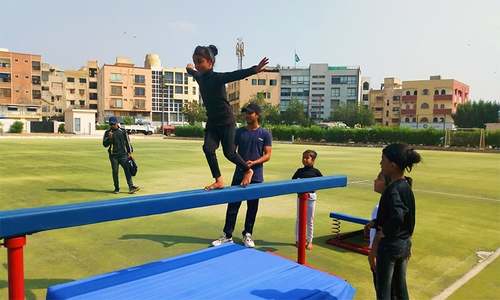
The gymnastics girls’ team from Macchar Colony, one of the largest slums in Karachi, winning accolades for their performances, if registered as minor aliens will never be able to fulfil their dream of representing the country of their birth — a country that has celebrated every Aug 14 with national songs, festivities, and immense fervour. Worldwide, countries are moving towards amending their laws to provide citizenship to children at birth and ending statelessness. All Pakistan needs is the will of the government to implement already existing laws, in turn granting rights and protection to its children: the right to be recognised and belong.
The writer is a lawyer and director of Imkaan Welfare Organisation
Published in Dawn, August 24th, 2021