0
0

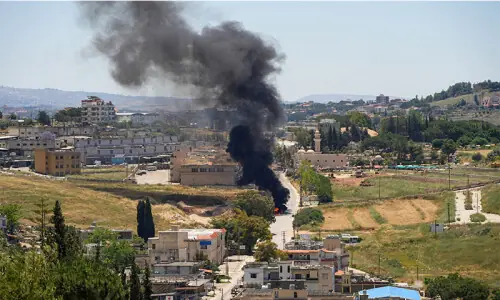
SRINAGAR: Public protests in occupied Kashmir were once an almost weekly occurrence but two years after New Delhi imposed direct rule on the region, locals say arbitrary arrests and intimidation by security forces wielding batons and snatching phones have left many too scared to voice dissent.
A week before the disputed region’s partial autonomy was abolished, and as a massive troop deployment fanned out to help forestall a local backlash, “Rafiq” was one of thousands put in “preventative detention”.
He believes he was arrested because in the past he had “protested against injustices”.
Freed after a harrowing year behind bars, the 26-year-old — too frightened to give his real name — says he is a “broken man”.
Echoing accounts from a dozen other Kashmiris, he and 30 others were bundled onto a military aircraft to a jail hundreds of miles from his home where they were “abused and intimidated”.
“A bright light was kept on all night in my cell for six months... It was hard to imagine that I would come out alive,” he said.
He at least was finally released. Activists say that scores of other Kashmiris are languishing in India’s notoriously harsh jails.
Mother-of-five Tasleema hasn’t seen her husband Gulzar Ahmed Bhat, who used to belong to a separatist group but left it in 2016, in two years.
Initially when police and soldiers raided his home, Bhat was out. So they held his 23-year-old nephew until his uncle turned himself in.
“I almost beg for work to feed my children,” a tearful Tasleema said, a young child on her lap.
‘A tool to silence dissent’
India has for decades stationed more than half a million soldiers in occupied Kashmir. Its troops are fighting local fighters demanding independence or a merger with Pakistan.
Prime Minister Narendra Modi’s government scrapped a section of the constitution guaranteeing the disputed territory’s partial autonomy in August 2019.
Kashmiris now no longer have a locally elected government and are ruled by a lieutenant governor appointed by New Delhi.
A legislative blitz has seen new laws applied and others scrapped. There are now hardly any senior Kashmiri police officers or bureaucrats in important decision-making positions.
Changes in land ownership rules have sparked accusations of “settler colonialism” aimed at achieving an irreversible demographic shift in the Muslim-majority disputed region.
Neither the Home Ministry in New Delhi nor the government’s spokesperson in occupied Kashmir responded to requests for comment for this article.
Published in Dawn, August 21st, 2021