14
14

TO anyone with a comparative perspective and a genuine desire to see the flourishing of an intellectual culture in Pakistan, it would be clear that we are currently producing few top-quality scholars and thought-leaders in the country. The decline of PhD programmes lies at the centre of this. Barring a few exceptions, graduates of PhD programmes have not been exposed to the requisite rigour — in their training and their original research — that would enable them to become high-quality experts in their fields of study.
Academic degrees must reflect value, and more than any other degree, the PhD degree should be emblematic of the highest levels of quality. The Higher Education Commission of Pakistan (HEC), as the regulator of academic standards in the country, has recently notified a new regulatory framework that is firmly focused on raising the quality of PhD programmes in the country. The previous framework, which had led to low levels of quality and was badly in need of repair, has been replaced with a globally up-to-date framework, specifically designed to ensure that our PhD programmes become internationally competitive.
HEC’s new PhD policy has mandated a number of quality-oriented standards that would bring our regulatory framework at par with academically advanced countries. One of the most important of these is that the minimum requirement for admissions to PhD programmes is now the completion of the BS (or equivalent) degree. This highly effective measure to enhance quality has led to some misunderstanding, which likely arises from a lack of knowledge about how PhD programmes have evolved globally.
It is important to note that direct admissions into doctoral programmes after Bachelor’s degrees (equivalent to 16 years of education) is now common practice in universities across the world. It is the norm, for instance, in the universities (including Ivy League universities) in the US. Oxford, Cambridge and other universities in the UK, as well as top universities in Canada, Australia, New Zealand and other academically advanced countries also allow holders of Bachelor’s or undergraduate honours degrees to enrol in a large number of PhD programmes. Further, the structure is similar to ‘MS leading to PhD programmes’ that have been offered within Pakistan.
Direct admissions from BS to PhD programmes enhances quality.
While the international best practice on this point is clear, the logic and benefits of this measure are also important to understand. Students who enter PhD programmes through this route spend several years in a sustained programme of study, where they develop in-depth expertise in their field through consistent immersion in a single rigorous programme. Students who first earn a Master’s degree and then proceed to a PhD programme have a more fragmented experience, where they first complete a short Master’s programme and then separately a short PhD programme. Another advantage is that admissions committees will have a larger pool of applicants to choose from, and can decide to enrol high-quality BS graduates (who would be required to complete more courses than those with Master’s degrees).
Hence, contrary to what some critics have noted, direct admissions from BS to PhD programmes enhances quality, otherwise a large number of top-ranked universities in the world would never have adopted this measure.
Similarly, HEC’s new standards allow universities to admit students to PhD programmes from related disciplines, which is also consistent with best practices in academically advanced countries. Other measures include revised admissions test requirements and the requirement for each applicant to write a personal statement to demonstrate their preparedness and commitment to enrol in the PhD programme. Further, consistent with requirements of all universities of good quality internationally, there is now a residency requirement of two years to allow proper immersion in the PhD programme, so that students can have quality interaction with supervisors and other members of the academic community. Another measure allows external evaluation of the dissertations by top Pakistani academics (along with the possibility of foreign evaluations), which is a measure that would further build our own academic capabilities.
Apart from not understanding global best practices, it is possible that many who have criticised the new policy have not taken the time to read it. The policy clearly states that it lays down minimum standards which all universities in the country must comply with. However, the policy leaves it to the universities’ discretion to increase requirements, if they so decide. For example, universities are free to require a Master’s degree for admission to any of their PhD programmes, or to require that the prior degree be in certain defined disciplines. The policy states that the programme will have to comply with the requirements of accreditation councils, which may limit switchover from other disciplines. Finally, it is a misreading of the policy that it will cause an end to MS/MPhil programmes. Neither will every student wish to pursue a rigorous PhD programme, nor will everyone who applies be able to secure a PhD admission (there is a limit to five PhD students per faculty supervisor).
I remember when I started my doctoral programme in Politics at Princeton, the very first assigned reading for my comparative politics subfield was Ibn Khaldun’s Muqaddima. The idea was that the North African scholar, much ahead of his time, was engaging in comparative thought, trying to understand why some societies fare better than others. One hopes that six centuries later, we can have a mindset that is not content with low quality and business as usual, but seeks to constantly evolve by considering the causes that have led others to progress intellectually and to build high quality institutions. We need change to create an effervesce in our intellectual milieu, and the quality standards in the HEC’s new PhD framework are intended to achieve this goal.
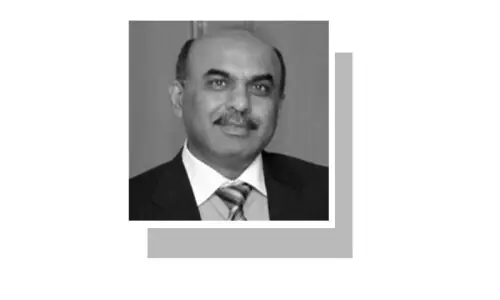
The writer is a lawyer and political scientist. As an HEC consultant, he has advised on the revamping effort.
Published in Dawn, February 1st, 2021