Circular debt will continue to haunt PM, says FPCCI



KARACHI: “The issue of circular debt will continue to haunt Prime Minister Imran Khan’s resolve of reducing cost of doing business, elimination of peak-hour charges from industrial power tariff and discount on consumption of additional units for B1, B2 B3 connections,” Federation of Pakistan Chambers of Commerce and Industry (FPCCI) President Mian Anjum Nisar said on Saturday.
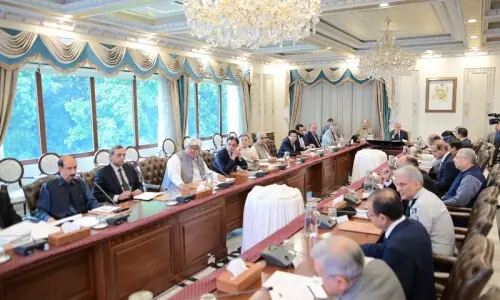
Growing circular debt in the power sector is a continued threat for the government’s recent move of cut in power tariff for SMEs, he said in a statement, while hailing the formation of a committee of all stakeholders for clearing the circular debt of Rs1.6 trillion.
The power sector circular debt issue may be considered holistically and a solution may be worked out to resolve the issue without escalating electricity cost, as its size has doubled during last two years in spite of that the government raised power tariff multiple times in the past on the plea of containing its rising trend, he added.
Apex body hails formation of committee to resolve issue
Past trend of increasing tariff to control circular debt has failed, he said while calling out for taking drastic measures and adopting holistic approach in tackling the problems in the sector to address power consumers’ vulnerability.
Referring to the audit report of the Ministry of Energy, he said circular debt size was Rs1,415bn in 2018, which jumped to Rs2,150bn in June 2019-20 while it skyrocketed by another Rs116bn in the first quarter of 2020-21 to astounding amount of around Rs2,266bn.
As much as Rs243bn was added to the circular debt in first half of FY 2020 while an increase of Rs294bn was seen in second half of that fiscal year. In the same way, around Rs288bn increased in first half of FY 2018-19 whereas, the second half of same financial year also witnessed a rise of Rs198bn.
He called for power sector reforms, considering the matter of overbilling, technical losses, transmission issues, proposal on decentralisation of the sector, promotion of off grid solutions, incentives for renewable energy solutions and capacity payments to the independent power producers. If the government failed to take immediate measures the power sector is likely to choke up due to heavy outstanding dues, he feared.
Anjum Nisar said the overall power sector reforms can be included closing down of inefficient IPPs, re-negotiations with the IPPs, bringing reforms in govt-owned power producing plants, improving efficiency and reducing costs of Wapda plants, besides converting the agriculture tube wells in Balochistan to solar in collaboration with the provincial government to reduce the cost.
“We have to resolve the circular debt issue by revamping the entire power sector, including tariff setting, efficiencies of power generating units, supply chain network and payment recoveries. If this is not done, the future of energy sector would remain at stake,” he warned.
The FPCCI president warned of any move to levy circular debt tax or increase in power tariff to pay off this debt. The business community has been calling for much needed reforms in the power sector to control pilferage, line losses and to stop corrupt practices.
He said the government had pledged to revamp the power sector and continued to raise electricity prices to eliminate subsidies, but failed to implement reforms to make the power sector efficient. The circular debt issue could have been resolved today, if the government had eliminated production, transmission and distribution losses; checked electricity theft and recovered the outstanding electricity dues, he stressed.
Published in Dawn, November 15th, 2020