Russian opposition politician fighting for life after drinking 'poisoned' tea: Spokeswoman


 4
4


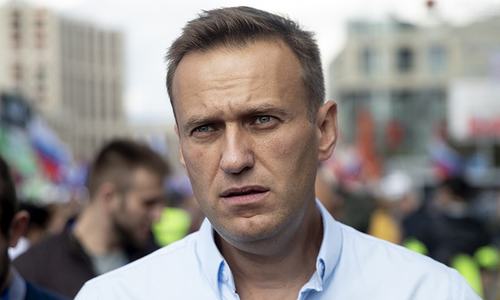
Kremlin critic Alexei Navalny was fighting for his life in a Siberian hospital on Thursday after drinking tea that allies said they think was laced with poison.
A fierce critic of President Vladimir Putin, Navalny started feeling ill on a plane returning to Moscow from Tomsk in Siberia on Wednesday morning. He was carried off the plane on a stretcher after it made an emergency landing at Omsk.
Kira Yarmysh, his spokeswoman, said he was in intensive care in a serious but stable condition, and on an artificial lung ventilator in a hospital in Omsk, about 2,200 kilometres east of Moscow.
“We assume that Alexei was poisoned with something mixed into his tea. It was the only thing that he drank in the morning. Alexei is now unconscious,” Yarmysh said.
Doctors gave contradictory information about his condition, saying it had stabilised and that he was in a coma but also that there was still a threat to his life and they were working to save him.
Navalny's wife, Yulia, flew from Moscow to be with him, but Yarmysh said hospital officials had so far prevented her from seeing her husband, citing a lack of patient consent.
Not the first time
There is a long history of Kremlin foes being poisoned or falling ill after suspected poisonings.
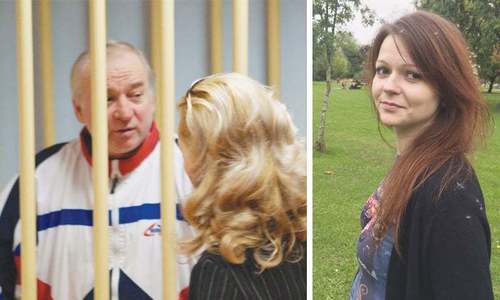
They include Alexander Litvinenko, who died in London in 2006 after drinking tea laced with polonium-210, and Sergei Skripal, a former double agent who was poisoned with a nerve agent in 2018 in Salisbury, England.
The Kremlin has repeatedly denied involvement in those and other incidents, calling them anti-Russian provocations.
It said on Thursday that doctors were doing everything they could to help Navalny and wished him a speedy recovery.
Any poisoning would need to be confirmed by laboratory tests, Kremlin spokesman Dmitry Peskov said.
Yarmysh did not say who she believed may have poisoned Navalny but said police had been called to the hospital.
Police said they had not yet opened an investigation into his suspected poisoning.
A regional health ministry spokeswoman, Tatyana Shakirova, confirmed that Navalny has been hospitalised in Omsk and said doctors assessed his condition as serious.
“Doctors are doing everything possible to stabilise his condition,” she said. “The poisoning version is one of several versions being considered. It's not possible now to say what the reason was.”
Navalny, a 44-year-old lawyer and anti-corruption activist, has served many stints in jail for organising anti-Kremlin protests and has been physically attacked in the street by pro-government activists.
He has published investigations into what he has said are outrageous examples of official corruption, with his videos on the subject garnering millions of views.
Russia holds regional elections next month and Navalny and his allies were in Omsk to try to increase support for candidates whom they back.
Screaming in pain
Passenger Pavel Lebedev posted an account of what he saw on social media.
“At the start of the flight he went to the toilet and didn't come back. He started feeling really sick. They struggled to bring him round and he was screaming in pain.” Navalny's plane later made an emergency landing in Omsk, 740 kilometres to the west of Tomsk.
Footage posted on social media showed a motionless Navalny being stretchered into an ambulance by medics.
S7, the airline he was travelling with, said Navalny had started feeling very ill soon after take-off and the captain had decided to make an emergency landing.
He had not eaten or drunk anything on board, it said.
Navalny had a cup of tea at a Tomsk airport cafe before boarding his flight, Yarmysh said.
She drew a parallel with an incident last year in which Navalny suffered an acute allergic reaction that one doctor said could have resulted from poisoning with an unknown chemical.
“Obviously the same has been done to him now,” Yarmysh said.
British foreign minister Dominic Raab said he was deeply concerned, as did Lithuanian Foreign Minister Linas Linkevicius.
“If (poisoning is) confirmed, those responsible must face consequences,” Linkevicius said on Twitter.