Lebanon assembly ratifies state of emergency after deadly blast


 0
0


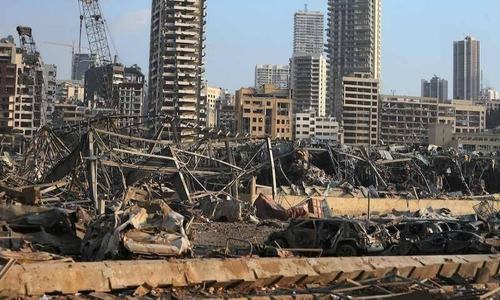
BEIRUT: Lebanon’s parliament on Thursday approved a two-week state of emergency in Beirut, declared after last week’s gigantic portside explosion, giving the army greater powers to suppress resurgent protests.
Top diplomats jetted in to show solidarity and contribute to the massive ongoing aid effort, but also to weigh in on political developments following a blast widely blamed on state corruption.
A senior US envoy said the FBI would join the probe into the colossal blast that killed 171 people, injured thousands and reignited street protests demanding the ouster of the entire political elite.
Dozens of demonstrators shouted as lawmakers arrived at parliament to ratify the emergency measure, but protesters, outnumbered by security forces, failed to block the MPs’ cars.
Lebanese are furious at a political leadership that allowed a massive shipment of ammonium nitrate fertiliser, a powerful explosive, to languish for years in a port warehouse despite repeated safety warnings.
“You have destroyed us! Leave!” demanded one social media post, calling for more street protests.
An investigation found that right up until the eve of the blast, officials had exchanged warnings over the cargo, but did nothing — despite experts’ warnings it could cause a major disaster.
Prime Minister Hassan Diab and his cabinet resigned Monday, but he still leads a transitional administration.
The state of emergency approved by parliament allows the army to close down assembly points and prohibit gatherings deemed threats to national security.
The move has worried Lebanon’s 10-month-old anti-government protest movement, which had faded amid the coronavirus pandemic and deepening economic hardship, but had returned to the streets in force since the August 4 disaster.
Human Rights Watch said it was “very concerned” the state of emergency would serve “as a pretext to crack down on protests and snuff out the very legitimate grievances of a large segment of the Lebanese population”.
A military official said the now formalised state of emergency would place all security forces under the command of the army, which would oversee the “post-explosion phase”.
The official, who asked not to be named because he is not authorised to speak on the issue, stressed that it would not lead to “a crackdown” on civil freedoms.
Published in Dawn, August 14th, 2020