Ban on furnace oil import lifted to meet power demand



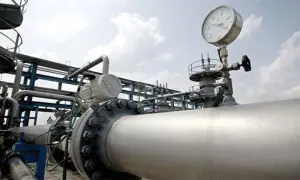
ISLAMABAD: The government has formally lifted a ban on import of furnace oil to meet peak electricity demand in the country, including Karachi, and asked at least seven oil companies to make arrangements for its import.
The decision was reportedly taken at a meeting of the Cabinet Committee on Energy (CCoE) headed by Planning and Development Minister Asad Umar early this week. The committee had imposed the ban on import of furnace oil in January last year to facilitate local refineries to exhaust their stocks. It was later given a one-time extension in April.
According to a notification issued by the petroleum division on Wednesday, the CCoE had allowed the state-run Pakistan State Oil (PSO) to import around 195,000 tonnes of furnace oil. The import was allowed on a summary moved by the petroleum division on the demand of the power division. A petroleum division official told Dawn that about 260,000 tonnes of furnace oil was already available in the country as of July 1, 2020.
The petroleum division said that under the CCoE decision, the PSO had been allowed import of two firm cargoes and one optional cargo of furnace oil (HSFO) with deficit quantity of up to 65,000 tonnes each on a C&F (cost-and-freight) basis through a gallop tender. It said the committee had also allowed private IPPs (independent power producers) to import furnace oil through the PSO or other OMCs (oil marketing companies) after getting a no-objection certificate (NOC) from the power division, which shall consult with the petroleum division to ensure all local RFO (residual fuel oil) is consumed first keeping in view the demand and supply situation.
In compliance with the CCoE decision, sources said, the power division had requested the petroleum division for facilitation of furnace oil imports by the IPPs and OMCs — Be Energy, Attock Petroleum, Hascol Petroleum, Oilco Petroleum and Fossil Energy.
However, the petroleum division has on its own notified that the power division should issue NOC only to the respective IPPs for arranging HSFO import through the OMC of their own choice so that uninterrupted supplies of furnace oil to the IPPs or general trade sector could be ensured.
It has also asked the power division to direct power plants and IPPs to maintain their stocks of furnace oil as per their respective power purchase agreements so that inventory issues with refineries could be avoided and their sustainable operations are ensured.
Published in Dawn, July 2nd, 2020