World Economic Forum report sounds alarm over climate crisis, political polarisation


 4
4


The Global Risks Report 2020 published on Wednesday by the World Economic Forum says economic and political polarisation will rise this year, while collaboration between world leaders, businesses and policy-makers is needed more than ever to stop several threats to climate, environment, public health and technology systems.
There is a clear need for a multistakeholder approach to mitigating risk at a time when the world cannot wait for the fog of geopolitical disorder to lift, according to findings of this year’s report released ahead of the World Economic Forum meeting opening in Davos, Switzerland on January 21.
The report forecasts a year of increased domestic and international divisions and economic slowdown. Geopolitical turbulence is propelling us towards an “unsettled” unilateral world of great power rivalries at a time when business and government leaders must focus urgently on working together to tackle shared risks.
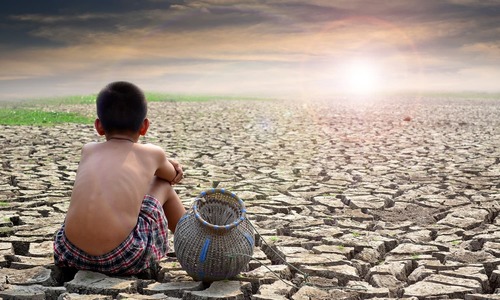
Examine: What's it like to suffer from climate change in Pakistan?
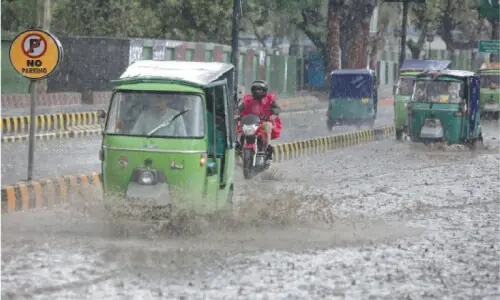
Severe threats to climate account for all of the Global Risks Report’s top long-term risks, with “economic confrontations” and “domestic political polarisation” recognised as significant short-term risks in 2020.
Titled “Burning Planet: Climate Fires and Political Frame Wars Rage”, the report warns that geopolitical turbulence and the retreat from multilateralism threatens everyone’s ability to tackle shared, critical global risks. Without urgent attention to repairing societal divisions and driving sustainable economic growth, leaders cannot systemically address threats like the climate or biodiversity crises, the report warns.
For the first time in the survey’s 10-year outlook, the top five global risks in terms of likelihood are all environmental. They are:
- Extreme weather events with major damage to property, infrastructure and loss of human life;
- Failure of climate-change mitigation and adaptation by governments and businesses;
- Human-made environmental damage and disasters, including environmental crime such as oil spills, and radioactive contamination;
- Major biodiversity loss and ecosystem collapse (terrestrial or marine) with irreversible consequences for the environment, resulting in severely depleted resources for humankind as well as industries; and
- Major natural disasters such as earthquakes, tsunamis, volcanic eruptions, and geomagnetic storms.
The long-term risk outlook shows the top 10 risks by likelihood and impact over the next 10 years. The risks stated by likelihood are: extreme weather, climate action failure, natural disaster, biodiversity loss, human-made environmental disasters, data fraud or theft, cyberattacks, water crises, global governance failure, and asset bubble, while risks by impact are: climate action failure, weapons of mass destruction, biodiversity, extreme weather, water crises, information infrastructure breakdown, natural disasters, cyberattacks, human-made environmental disasters and infectious diseases.
The report adds that unless stakeholders adapt to “today’s epochal power-shift” and geopolitical turbulence – while still preparing for the future – time will run out to address some of the most pressing economic, environmental and technological challenges. This signals where action by businesses and policy-makers is most needed.
“The political landscape is polarised, sea levels are rising and climate fires are burning. This is the year when world leaders must work with all sectors of society to repair and reinvigorate our systems of cooperation, not just for short-term benefit but for tackling our deep-rooted risks,” said Borge Brende, president of the World Economic Forum.
To younger generations, the state of the planet is even more alarming. The report highlights how risks are seen by those born after 1980. They ranked environmental risks higher than other respondents, in the short and long terms. Almost 90 per cent of these respondents believe “extreme heat waves”, “destruction of ecosystems” and “health impacted by pollution” will be aggravated in 2020; compared to 77pc, 76pc and 67pc, respectively, for other generations. They also believe that the impact of environmental risks by 2030 will be more catastrophic and more likely.
Human activity has already caused the loss of 83pc of all wild mammals and half of the plants – which underpin our food and health systems. Peter Giger, Group Chief Risk Officer, Zurich Insurance Group, warned of the urgent need to adapt faster to avoid the worst and irreversible impacts of climate change and to do more to protect the planet’s biodiversity:
“Biologically diverse ecosystems capture vast amounts of carbon and provide massive economic benefits that are estimated at $33 trillion per year – the equivalent to the GDP of the US and China combined. It’s critical that companies and policy-makers move faster to transition to a low carbon economy and more sustainable business models.
“We are already seeing companies destroyed by failing to align their strategies to shifts in policy and customer preferences. Transitionary risks are real, and everyone must play their part to mitigate them. It’s not just an economic imperative, it is simply the right thing to do,” he said.