10,000 camels to be killed in drought-hit Australia for 'drinking too much water'


 49
49
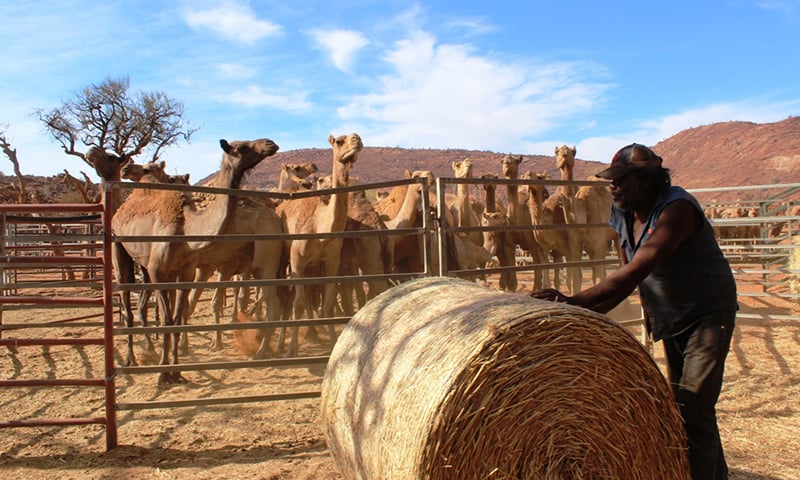

Indigenous leaders in South Australia have given their nod to the mass culling of feral camels by an army of shooters, News Corp Australia reported on Tuesday.
Professional shooters will begin the five-day air operation tomorrow (Wednesday) which will see 10,000 camels shot down from helicopters, according to the Australian publication.
South Australia's northwest region has seen the animals overrun the drought-hit area.
The managers of the Anangu Pitjantjatjara Yankunytjatjara (APY) Lands gave the go ahead, citing the "havoc" caused by the creatures in the local communities.
“We have been stuck in stinking hot and uncomfortable conditions, feeling unwell, because the camels are coming in and knocking down fences, getting in around the houses and trying to get to water through air conditioners,’’ Marita Baker, board member of the APY executive, told The Australian.
Baker's Kanypi community is one of many to have been invaded by the parched camels in search for water.
“For many years traditional owners in the west of the APY Lands have mustered feral camels for sale, but this has been unable to manage the scale and number of camels that congregate in dry conditions,” a spokesperson for the SA Department of Environment and Water told news.com.au.
The spokesperson said that as a result, "significant damage to infrastructure, danger to families and communities, increased grazing pressure across the APY Lands" is witnessed. Additionally, the massive presence of the camels pose a danger to animal welfare "as some camels die of thirst or trample each other to access water".
“In some cases dead animals have contaminated important water sources and cultural sites,” he said.
According to estimates, there are more than 1.2 million wild camels in Australia — fond mostly in the centre of the continent. They have been spreading further away, however, into Western Australia.
It is thought that they are migrating away from the Nullarbor and Goldfields "in a desperate attempt to find food and water", said News Corp Australia.
Camels were first brought to the land in around 1840. By 2008, they swelled to a million-strong and were roaming the central arid lands of Western Australia, the Northern Territory, South Australia and Queensland, according to the latest Australia State of Environment Report (ASER).
Mass culling operations, using both ground-based and aerial methods, were also undertaken between 2009 and 2013, which saw 160,000 camels killed.