Three killed in Baghdad as protesters ignore plea for calm


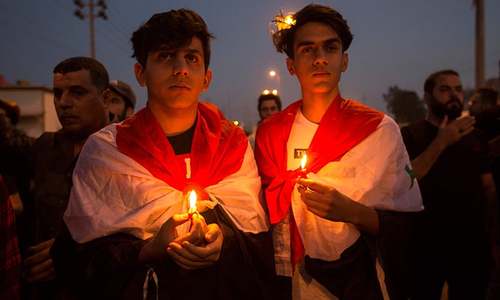
BAGHDAD: Security forces fired live rounds and tear gas at anti-government protesters in a central Baghdad square on Friday, killing three people, in bloody confrontations that continued despite an influential Shia leaders call for calm.
At least 320 people have been killed and thousands have been wounded since the unrest began on Oct 1, when protesters took to the streets in the tens of thousands outraged by what they said was widespread corruption, lack of job opportunities and poor basic services despite the country’s oil wealth.
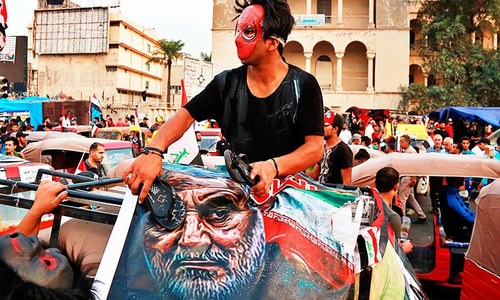
Renewed clashes broke out in Khilani square on Friday afternoon. Soldiers and riot police began firing live rounds and tear gas at hundreds of protesters who removed concrete barriers and streamed into the square. Iraqi security and medical officials said three protesters were killed and at least 25 others wounded.
Friday’s deaths brought to four the number of protesters killed in the past 24 hours in the square, which has been at the center of confrontations for days.
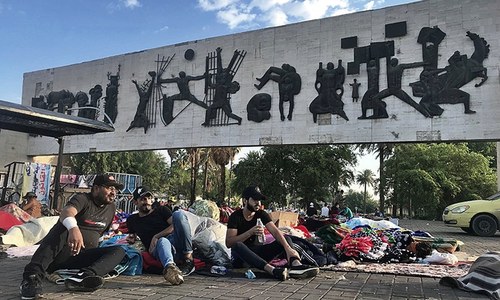
Demonstrations have mostly been taking place in Baghdad’s Tahrir and Khilani squares and the predominantly Shia southern provinces, following tough measures by Iraqi security forces to clamp down on protests.
Iraq will never be the same following the weeks of demonstrations in Baghdad and the country’s south demanding sweeping reform, its top Shia cleric said in his most emphatic endorsement yet of the protest movement.
Grand Ayatollah Ali Sistani said authorities must respond quickly to the protests which have flooded the capital and cities across the mainly Shia south in an outpouring of anger over rampant corruption and lack of jobs.
“If those in power think that they can evade the benefits of real reform by stalling and procrastination, they are delusional,” Sistani said in his weekly sermon, delivered by a representative in Karbala.
“What comes after these protests will not be the same as before, and they should be aware of that.” Since starting on Oct 1, demonstrations have escalated into demands for root-and-branch reform of the political system.
Sistani cautiously backed the protests when they began but has since firmed up his support, describing protests on Friday as “the honourable way” to seek change.
The 89-year-old cleric, who is based in Najaf and never appears in public, remains hugely influential in the south.
Emboldened after his sermon, thousands of protesters rallied in the southern hotspots of Kut, Hilla, Nasiriyah and Basra, correspondents reported.
Near the capital’s main protest camp in Tahrir (Liberation) Square, demonstrators decided to hold their ground after hearing the Shia religious leadership, or “marjaiyah”.
“No one retreat, even the marjaiyah is with us!” said one young man as security forces pelted them with tear gas canisters.
The protesters present the biggest threat so far to the political system ushered in by the US-led invasion which toppled the regime of longtime dictator Saddam Hussein in 2003.
Protesters blame that system for rampant corruption, staggering unemployment rates and poor services in resource-rich Iraq, OPEC’s second-biggest producer.
But the political establishment has rejected demands for the government to step down and instead closed ranks.
That consensus was brokered by neighbouring Iran’s pointman for Iraq, senior Islamic Revolutionary Guard Corps commander Major General Qasem Soleimani.
Sistani denies being party to the Iranian-sponsored deal and has warned outside powers against “imposing” anything on Iraq.
On Monday, he met the United Nations top official in Iraq, Jeanine Hennis-Plasschaert, to back her phased roadmap for tackling the crisis.
The plan calls for electoral reforms within two weeks followed by constitutional amendments and infrastructure legislation within three months.
Published in Dawn, November 16th, 2019