Pakistan denies airspace request for Modi's visit to Saudi Arabia
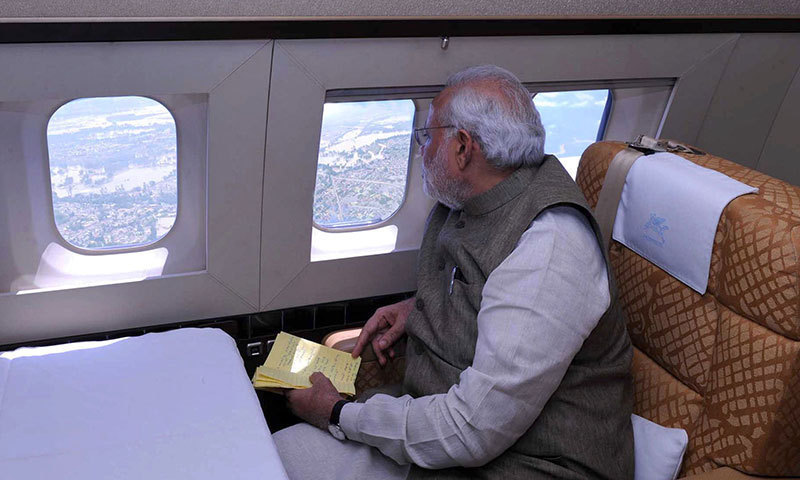


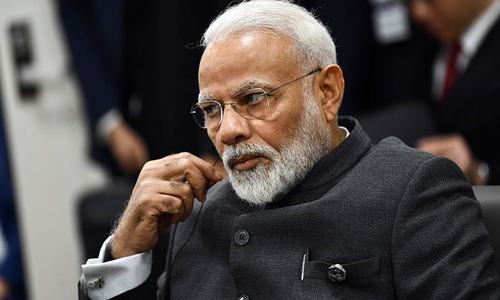
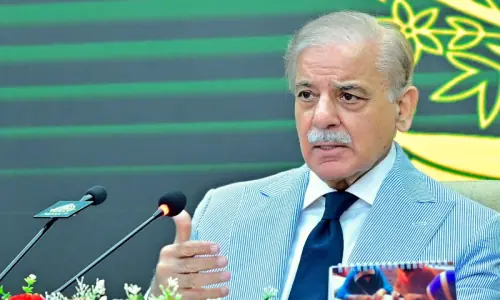
Foreign Minister Shah Mahmood Qureshi on Sunday announced that Islamabad has denied New Delhi's request for use of airspace for Indian Prime Minister Narendra Modi.
The Indian government had sought Pakistan's permission to use the country's airspace on October 28 for the Indian premier who will be visiting Saudi Arabia to participate in an international business conference on October 29.
According to Radio Pakistan, the foreign minister in a statement said that the decision has been taken in "context of today's Black Day and in view of the continued gross human rights violations in occupied Jammu and Kashmir".
The minister said that the Indian High Commissioner was being informed of this decision in writing.
Prime Minister Imran Khan will leave for Saudi Arabia on October 28 to participate in the same conference being held in Riyadh.
The government in September had also denied India's request for Prime Minister Modi to use Pakistani airspace for his flight to Germany.
“Keeping in view the situation in occupied Kashmir and India’s attitude witnessed in the tyranny and oppression (suffered by Kashmiris) and violations of rights in the region, we have decided not to grant this request,” Foreign Minister Qureshi had said.
A source at the time had said that as per international law, Pakistan is bound to grant permission to the Indian premier. If it is rejected, India can appeal to the International Civil Aviation Organisation as a result of which Pakistan may be required to pay a hefty fine.
Pakistanis around the world and Kashmiris on both sides of the Line of Control (LoC) are observing "Black Day" today to convey their rejection of India's illegal occupation of Kashmir on October 27, 1947.
Frustration, anger and fear have been growing in the region since August 5, when the Indian government stripped occupied Kashmir of its semi-autonomous status and imposed a curfew and a communications blackout. With a brief restoration in some call and text services for mobile phone services, the clampdown has now continued for over 80 days.