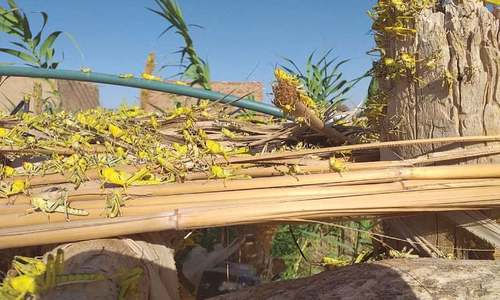
FAO warns of serious locust situation
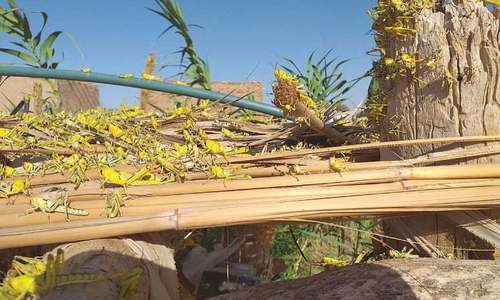

ISLAMABAD: The Food and Agriculture Organisation (FAO) of the United Nations on Tuesday warned that the current situation relating to locusts in Pakistan was “most serious” as a second generation of the insect had been bred.
According to the FAO’s Locust Watch report, there remains a risk of further breeding, causing locust numbers to increase, with the possibility of swarm formation from late September onwards.
Yemen and India are facing a similar situation, and the situation could deteriorate in Ethiopia and Eritrea.
During August, adults continued to lay eggs primarily in Cholistan, and to a lesser extent, in Nara and Tharparkar deserts where groups of hoppers had formed near the Indian border.
From mid-August onwards, hatching caused locust numbers to increase. Adults were also laying eggs and hoppers were forming groups in the Lasbela area west of Karachi. The update says that during the month of August, nearly 86,000 hectares were treated, out of which 16,455 hectares of land was treated in Pakistan.
Breeding will continue in Cholistan and Tharparkar deserts with another generation of hatching and the formation of hopper groups and bands with new immature adult groups and perhaps a few small swarms forming by late September.
Meanwhile, the FAO, in collaboration with the Federal Plant Protection and Agriculture Department of Punjab, has completed a training programme to build capacity of government officials and technical staff to prepare for a possible locust outbreak in Pakistan.
In the Bahawalpur area, 500 local farmers attended a workshop on desert locust with a view to increasing their general awareness about different types of locusts.
Published in Dawn, September 4th, 2019