India’s top court to hear Ayodhya dispute on daily basis


 47
47


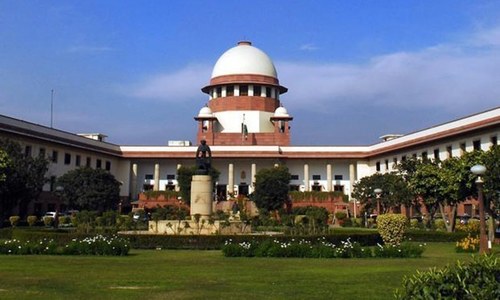
NEW DELHI: India’s top court will hear arguments every day in an effort to resolve a decades-old dispute over what should be built on the ruins of a 16th-century mosque, Chief Justice Ranjan Gogoi said on Friday.
The move strengthens hopes for eventual resolution of a quarrel at the centre of fraught ties between India’s majority Hindus and its Muslim community, which accounts for 14 percent of a population of 1.3 billion.
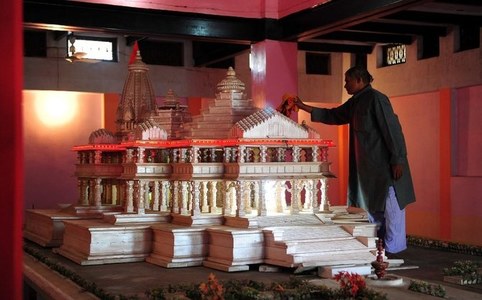
Many devout Hindus believe the site in Ayodhya, in India’s most populous state of Uttar Pradesh, to be the birthplace of one of their most revered deities, the Lord Ram.
The Supreme Court will hear arguments in the case every day to help resolve the dispute, Gogoi told a packed courtroom, after a mediation panel had proved unable to reach an amicable settlement.
“The mediation proceedings have not resulted in any final settlement,” Gogoi said.
“We, therefore, have to proceed with the hearing of the appeals, which will commence from August 6.”
The hearings will be held on a “day-to-day basis”, he added.
In June, hundreds of Hindu monks gathered under the banner of a group linked to Prime Minister Narendra Modi’s Hindu nationalist party to urge the government to help build a temple in Ayodhya.
The dispute over the site in northern Uttar Pradesh state is one of the most polarising issues in India, whose history is pockmarked with horrific Hindu-Muslim communal clashes.
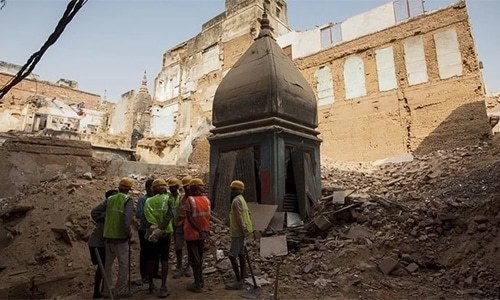
In 1992, a militant Hindu mob tore down the centuries-old mosque, triggering riots that killed about 2,000 people in one of the worst instances of communal violence in India since the country’s independence from British colonial rule in 1947.
Hindu groups insist there was a temple at the site before the mosque was built by a Muslim ruler in 1528.
After the demolition of the mosque in the early 1990s, the Supreme Court took control of the controversial site.
In March, the Supreme Court appointed an arbitration panel, headed by former judge F. M. Kalifulla to mediate in the dispute.
Other than keeping control of the site, the Supreme Court has weighed petitions from both communities on what should be built there.
Published in Dawn, August 3rd, 2019