Deterrence didn’t fail during stand-off with India: officials
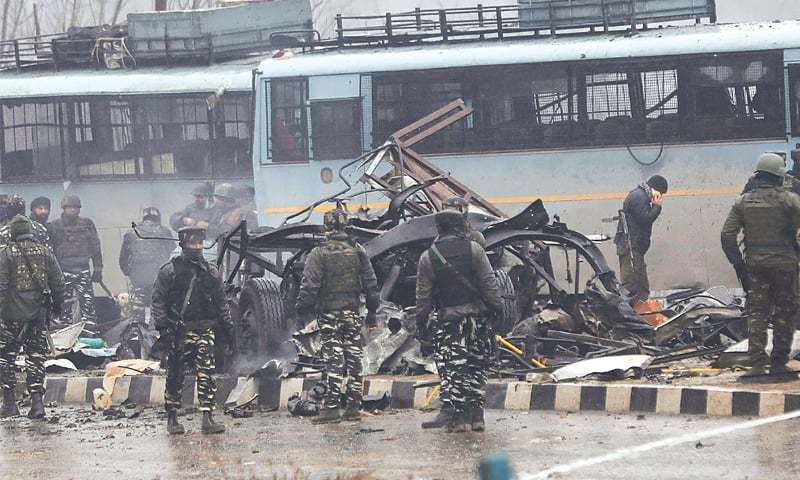


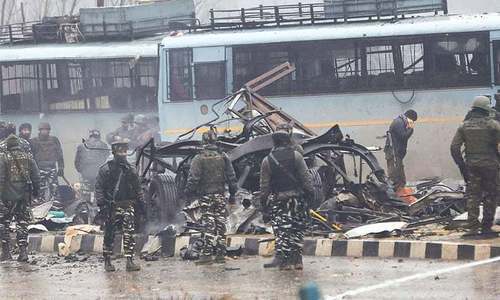
ISLAMABAD: Senior officials insist that deterrence did not fail during the military confrontation between India and Pakistan in the aftermath of the Pulwama incident.
Two senior officials — Director General Arms Control and Disarmament Affairs, Strategic Plans Division (SPD) Brig Zahir Kazmi, and Director General Arms Control and Disarmament, Ministry of Foreign Affairs, Kamran Akhtar — told journalists at an interaction hosted by the Islamabad Policy Institute (IPI) that deterrence worked despite dangerous escalation witnessed in the last week of February.
They were speaking on the topic ‘Pakistan’s Nuclear Journey: 21 Years of Deterrence and Stability’. The discussion largely remained focused on post-Pulwama confrontation between the two nuclear-armed arch-rivals during which the Indian Air Force violated Pakistan’s airspace and when Pakistan retaliated the following day, India mobilised its missile batteries and nuclear submarines. The situation later de-escalated due to intervention by third-party intermediaries.
Post-Pulwama confrontation discussed at an event about Pakistan’s nuclear journey
Mr Akhtar said: “Deterrence is credible if it can ward off any nuclear or massive conventional attack … That did not happen (during post-Pulwama stand-off). India couldn’t do that. That was where deterrence was maintained.” The deterrence was related to Indian doctrine of cold start, he added.
He said deterrence was largely a misunderstood concept and “some have come to believe that even a stone cannot be hurled at us”. It by no means implied that India could now do nothing against Pakistan, he maintained while explaining how the Indian Air Force intruded into Pakistani airspace despite knowing that Pakistan possessed nukes. He cautioned that the misunderstood concept of deterrence could undermine public confidence and work against deterrence from psychological and political point of view.
“If Indians are trying to sell this narrative that deterrence failed then it is an irresponsible and dangerous narrative, which could undermine strategic stability and lead to escalation for India would be responsible,” he observed.
Brig Zahir Kazmi stated that the purpose of deterrence was to close space for war and bring states to the negotiating table.
He said deterrence worked during the post-Pulwama military stand-off despite Indian attempt to escalate to a different level by talking about mobilisation of nuclear missile and nuclear submarines.
Brig Kazmi identified three imperatives for deterrence. First, enabling geostrategic environment that includes sustainable mechanism for dispute resolution; second, strategic restraint and responsibility; and third, maintenance of balance in nuclear deterrence capabilities through arms control rather than competition.
He further clarified that deterrence is not an end in itself but a psychological state. “It should inspire fear in which the perceived cost of deterrence breakdown is higher than the desired benefits of preferring war as an instrument for dispute resolution.”
Defence analyst Syed Mohammad Ali in his opening remarks stated that Pakistan’s nuclear programme has significantly contributed towards meeting both its traditional and non-traditional security needs. Nuclear deterrence, he said, had enabled Pakistan timely manage and de-escalate several regional crises with India during the past three decades. It also gave the country’s national leadership and its diplomats confidence in international diplomacy.
Earlier, welcoming the guests, IPI’s executive director Syed Sajjad Shabbir said that Pakistan’s nuclear programme had helped maintain deterrence stability in a conflict-prone South Asia region. He announced that the IPI would shortly publish a handbook on nuclear issues to create greater understanding among journalists, politicians and bureaucrats.
Published in Dawn, June 1st, 2019