PPP says 'no' to second extension in tenure of military courts



The PPP on Friday said it was firmly sticking to its stance of opposing a second extension in the tenure of military courts, which were set up in 2015 to try civilians on charges of terrorism.
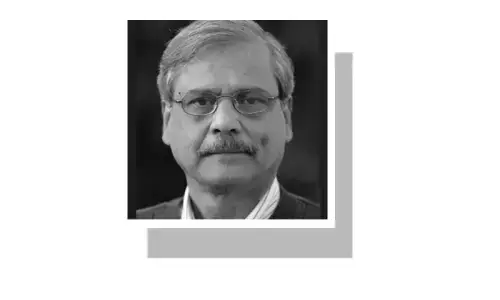
"NO to the military courts," declared senior PPP leader Farhatullah Babar at a press conference in Karachi. He along with other party leaders was briefing the media after a meeting of PPP's central office-bearers and senior leaders held at the Bilawal House.
In December, PPP Chairperson Bilawal Bhutto-Zardari had unequivocally said that his party would not support another extension to the military courts, whose current two-year term is set to expire in March. However, the president of the PML-N, the other main opposition party, has spoken in military courts' favour and hinted that his party could consider supporting an extension, if approached by the Pakistan Tehreek-i-Insaf-led government.
Editorial: Extending military courts, again?
Stating the reasons behind the party's stance on the issue, Babar said incidents of terrorism in Pakistan had witnessed a decline and therefore there was "no justification for military courts".
Even if terrorism incidents had not declined, he said, "then the military courts cannot do in 40 years [what] they haven't been able to do in four years".
Secondly, Babar said when "extraordinary laws" implemented under "extraordinary circumstances" are extended, then after some time certain "vested interests" are created to protect such legislation; he cited the example of the Hudood Ordinances and others laws from Gen Ziaul Haq's era in this regard.
He said the PPP was opposing the military tribunals "lest it happens that Pakistan's judiciary is militarised and the military becomes judicialised", adding that such a situation would be very dangerous for the country.
The former senator alleged that a "dangerous" nexus existed between military courts and missing persons in the country, adding that the tribunals had allegedly been used to "justify" enforced disappearances on the pretext that cases against such (missing) persons were being heard by military courts.
"This is something which the PPP and its human rights agenda will never accept," Babar said. "If an extension was given once [to the military courts], that was one time too much."
The military courts were allowed to try civilians accused of terrorism in January 2015, soon after a terrorist attack on the Army Public School in Peshawar in December 2014. In the attack, 144 people — mostly children — were killed by the banned Tehreek-i-Taliban Pakistan.
The courts were given a two-year constitutional cover after both houses of the parliament passed the 21st constitutional amendment, despite fears among lawmakers that the tribunals they were authorising would not be able to ensure due process to the suspects and might undermine democracy. The amendment included a sunset clause under which the courts' tenure would expire in two years.
The military courts remained dysfunctional from January 7, 2017 till March 2017 (due to expiry of the two-year constitutional cover), after which they were extended for another two years by the parliament.
Military courts have nothing to do with missing persons issue: Maj Gen Ghafoor
While talking to Dunya News, Inter-Services Public Relations (ISPR) Director General Maj Gen Asif Ghafoor said that the parliament had decided to set up military courts and revive the death penalty in 2015 through a "national political consensus" and extended the tribunals two years later through consensus as well.
"It is wrong to say that the military courts are desired by the army [alone] or a single institution," he said while talking to journalist Kamran Khan on his show 'Dunya Kamran Khan Kay Sath'. Ghafoor stressed it was the parliament which had decided to extend the military courts' tenure and if a similar decision needs to be taken, it would again be the parliament to do so.
Maj Gen Ghafoor said the military courts were established "because our criminal justice system was not effective", adding that it should be considered whether the requisite justice system now exists in the country.
He said the entire process of military court trials was "very transparent" and that the matter had "nothing to do with the missing persons issue". The courts have created a fear among terrorists and their handlers and as a result, terrorism has declined in the country, the ISPR chief said.
He said the military courts were an "additional job" for the army and it was not the "solo demand" of the military that the tribunals should exist. "We will follow the orders ... as issued by the parliament," Maj Gen Ghafoor concluded.