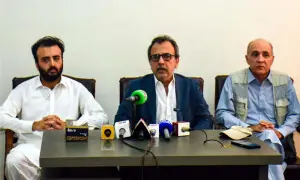
KARACHI: “Student unions will be revived and remodelled to promote pro-peace, women-friendly and student-centred activities on campus. Five per cent seats will also be reserved for young people in local bodies,” said Sindh Youth Minister Abid Hussain Bhayo.
He was speaking at the launch of the much-awaited Sindh Youth Policy prepared with technical support of Bargad, an organisation for youth development and the United Nations Population Fund (UNFPA) here on Friday.
Some 600 participants, including provincial ministers, government officials, international donors and members of civil society, attended the event.
The youth minister announced that under the policy, a Youth Development Commission and a Youth Venture Capital Fund would be established by the government.
The minister said under the policy youth would be engaged in decision-making at the municipal and provincial levels.
“Interfaith harmony will be encouraged through youth-led campaigns,” he said.
Youth affairs department secretary Dr Niaz Ali Abbasi announced the establishment of e-Rozgar scheme, which will provide job opportunities to youth without formal education.
He said the Sindh Youth Policy was the result of a province-wide consultative process involving multiple stakeholders and most importantly the youth.
“Efforts will be made to encourage youth entrepreneurship through trainings at incubation centres, market linkages and partnership with educational institutions,” he added.
Bargad executive director Sabiha Shaheen said: “From 2012 to 2015, over 5,000 youth participated in consultative process. The policy, devised in light of suggestions and needs of Sindh’s youth includes a clear roadmap, time-bound strategies, quantified targets and potential partners”.
Mohammed Qazilbash, country director of Oxfam, which also helped in developing the policy, said that harnessing the energy and strength of young women and men to become active citizens was Oxfam’s goal of transformational change.
“Young people in Sindh face multiple forms of inequality and grapple with challenges inherited from previous generations. This policy ensures that youth have the necessary skills and opportunities to define the future for themselves and their province,” he said.
Dr Kaiser Bengali, economist and dean of Shaheed Zulfikar Ali Bhutto Institute of Science and Technology, said it was important to know where we want to go.
“The Sindh government and Bargad deserve credit for formulating the policy,” he said.
Faisal Shabbir, the national coordinator of Right Here Right Now, and Noor Mohammed, CEO of Civil Society Support Programme also spoke.
Published in Dawn, May 27th, 2018