An Anti-Terrorism Court (ATC) in Islamabad was informed on Wednesday that the federal government will apprise the court by June 27 about its final decision regarding bringing 27 Indian citizens to the witness box in connection with Mumbai attacks case.
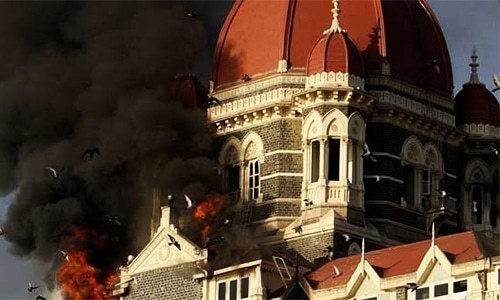
The Mumbai attacks, which took place in 2008, resurfaced in recent headlines, with progress in the trial coming under question, when ousted premier Nawaz Sharif in an interview had asked: "Why can’t we complete the trial?"
ATC Judge Shahrukh Arjumand set the deadline of June 27 for a clarification on the status of Indian witnesses in connection with the case after the interior ministry submitted an application in this regard.
Take a look: Indian govt behind parliament, Mumbai attacks, claims former CBI official
On May 16 the court had issued notices to the secretaries of interior and foreign affairs and sought their response on bringing 27 Indian prosecution witnesses to Pakistan for recording their testimony against suspects of the attacks.
On Wednesday the ATC also recorded the statement of prosecution witness Wajid Zia.
Zia, who headed the joint investigation team (JIT) on Panamagate, was part of the JIT constituted to probe Mumbai attacks. He was a witness of the certain record and correspondence with the Indian government.
The last prosecution witness in the case, Zahid Akhtar, also got his statement recorded. The defence counsel, however, sought adjournment from the court since he planned to cross-examine the witness later on.
Subsequently, the court adjourned further proceeding till June 6.
In January 2016, the Pakistani government contacted its Indian counterpart asking it to send the 27 witnesses to Pakistan to testify against the suspects, including the alleged mastermind of the attacks.
The alleged mastermind, Zakiur Rehman Lakhvi, and the other suspects — Abdul Wajid, Mazhar Iqbal, Hammad Amin Sadiq, Shahid Jameel Riaz, Jamil Ahmed, Younus Anjum and Sufyan Zafar— are being tried in the court since 2009.
The prosecution has so far completed the testimony of all the Pakistani witnesses. Though the Indian government in 2012 and 2013 constituted a commission for recording of the statements of the witnesses, it remained confined to only four of them, mutually decided by both Pakistan and Indian government vide an agreement signed in 2010.
These four witnesses included woman magistrate R.V. Sawant Waghule, who recorded the confessional statement of Ajmal Kasab, Ramesh Mahale, the chief investigation officer of the case, and Ganesh Dhunraj and Chintaman Mohite, the doctors who had carried out the postmortem on the bodies of the terrorists killed during the attacks.
The prosecution had already moved an application for recording the statement of another 27 Indian witnesses and the Pakistani government has formally asked the Indian Ministry of External Affairs to bring these witnesses into the witness box.