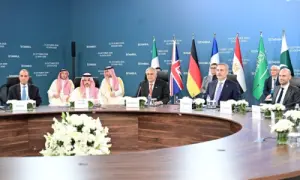
TASHKENT: The five permanent members of the United Nations Security Council and more than a dozen other national delegations declared on Tuesday their support for the peace process in Afghanistan after talks that Taliban did not attend.
The more than 20 signatories of a declaration, including the United States, Russia, China, France and Britain, committed themselves to an “Afghan-led and Afghan-owned”, peace process, although the Taliban’s absence from the high-level conference in the Uzbek capital Tashkent cast doubt over the value of the talks.
The declaration distributed at the end of the conference noted the signatories’ “strong backing for the National Unity Government’s offer to launch direct talks with the Taliban, without any preconditions” and called on the Taliban to accept the offer.
In a statement sent to AFP via WhatsApp messenger on Tuesday, the Taliban said they were “not invited to the Tashkent conference and it is too early to make a statement on its outcome”.
International tensions
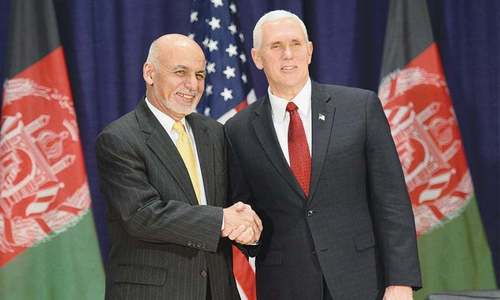
The talks — attended by Afghan President Ashraf Ghani and EU diplomatic chief Federica Mogherini — were intended to display a united front in support of direct talks between the Afghan government and the Taliban.
But aside from the rhetoric of goodwill towards the war-torn country, international tensions were on full display in Tashkent.
On the sidelines of the event Russian Foreign Minister Sergei Lavrov accused Washington of applying “colossal pressure” on allies to expel scores of Russia’s diplomats over the March 4 poisoning of a former Russian double agent and his daughter in the English city of Salisbury.
Russia and the United States also butted heads over Afghanistan in the run-up to the conference.
Last week Moscow’s embassy in Kabul condemned as “absolutely baseless” the recent suggestion of the top US commander in Afghanistan General John Nicholson that Russia had provided military aid to the Taliban via ex-Soviet ally Tajikistan.
In a statement on Tuesday Tajikistan, whose top diplomat attended the Tashkent conference, also refuted the allegations and called Nicholson’s comments “deeply regrettable”.
The Taliban have been resurgent since the withdrawal of US-led Nato combat troops at the end of 2014, taking back territory and devastating Afghanistan’s beleaguered security forces.
Earlier this month Ghani offered an olive branch to the country’s largest militant group, suggesting that if they are prepared to negotiate they could be recognised as a political party with a legitimate role in Afghanistan’s future.
Published in Dawn, March 28th, 2018