LAHORE: A report on ‘Women’s Safety Audit in Public Transport’ says that Lahore bus stations and buses are not women friendly.
Women and girls face staring, stalking, obscene gestures, whistling, lewd remarks and touching while commuting in public buses.
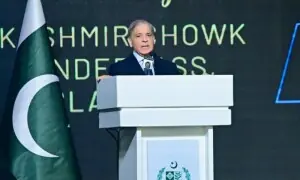
The report was launched by the Aurat Publication and Information Service Foundation at a local hotel on Tuesday where Margaret Adamson, Australian high commissioner to Pakistan, was chief guest. The study was conducted by Aurat Foundation and Co-led by the Women’s Development Department of Punjab and the UN Women, in collaboration with the Punjab Commission on the Status of Women, the Chief Minister’s Strategic Reform Unit and the Punjab Safe Cities Authority.
Margaret Adamson said there was need to focus on a clear way enhancing contribution to women’s safety while traveling and at public places.
Jamshed Qazi, country representative of the UN Women Pakistan, said one did not see many women and girls at public places in cities as sexual harassment was a big hurdle. He said the Punjab government introduced a good initiative of ‘Women on Wheels’, whereas civil society activists introduced ‘Girls at Dhaba’. He said the mobility of women at public places was a real challenge.
Women’s Development Department Secretary Bushra Aman said the dream of the future was such where both men and women were treated equally and had equal rights and opportunities. She said work was under way to build separate waiting areas space for women at bus stations.
The Women’s Audit in Public Transport in Lahore assesses the safety concerns of women and girls commuters of public transport in Lahore. Focusing on the bus services provided by the Lahore Transport Company (LTC) and Metro Bus, it includes a detailed desk review, a perception study with 903 women commuters and 100 bus drivers and conductors, key informant interviews, and focus group discussions.
The study finds that inadequate infrastructure and security arrangements, a gender neutral approach by administrators and policymakers, social attitudes towards women and girls, and lack of awareness among the general population about the impacts of sexual harassment on women’s and girl’s lives, are some of the major reasons why dramatic levels of harassment on public transport have gone unnoticed and perhaps increased.
The report reveals that data on women using public transport is not currently available, limiting gender sensitive policies and actions. There is limited use of travel cards by women, and about 79 per cent of women and girls traveling on the metro bus service do not process travel cards. There are significant safety concerns at bus stops as about 82 per cent of women commuters report harassment at bus stops, with higher rates at LTC bus stops compared to metro bus stations, and amongst younger women (20-29 years of age) compared to older women.
Published in Dawn, December 20th, 2017