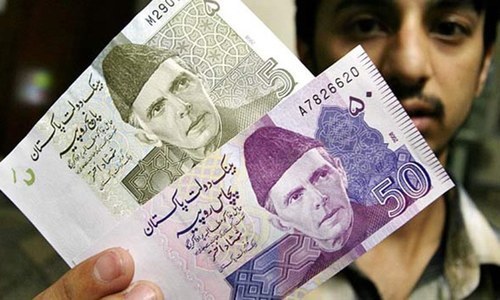
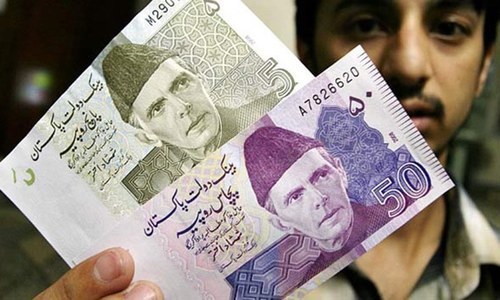
Last Friday the exchange rate witnessed a sudden shock which jolted the market causing stakeholders, particularly importers, to panic.
What was surprising was the absence of the central bank from inter-bank dollar trading in the first session on the day. Both bankers and currency dealers were unaware of what was going on as the dollar started to pick up pace and, within two hours, rose to Rs110 from Rs105.55.
This sharp increase in a very short span of time created panic in the market; sellers stopped selling while importers rushed to buy more.
The exchange rate movement will now be based on demand and supply of foreign exchange in the interbank market
However, after just two hours the market started slipping and settled around Rs106.50.
The climax came to an end when the State Bank came out with a press statement after market closure, saying that it was an adjustment to create a balance in the exchange rate.
It then announced the closing rate at Rs107 which was higher than the market’s closing rate and indicated that the market on Monday will resume its trading at Rs107. This means a devaluation of 1.5 per cent was officially confirmed.
The State Bank said the continuation of high growth in imports has led to a widening current account deficit, and consequently depleting the country’s foreign exchange reserves, leading to the adjustment in the inter-bank exchange rate. This exchange rate movement is based on demand and supply of foreign exchange in the interbank market.
However, other stakeholders like banks have a slightly different view; even though they are not against the devaluation.
“I am not against devaluation but we must consider the impact on exports. It will increase the import cost but at the same it would also hurt exports since over 30pc of imported constituents are used to make our exportable products,” President and CEO of National Bank of Pakistan told Dawn.
He said there should be a well-thought-out plan and its impact on all segments of the economy should be considered.
He said to make our exportable products competitive devaluation is not enough. At the same time, the devaluation will translate into a massive increase the foreign debt since we calculate foreign debts in local currency.
“If the devaluation could not work to boost exports, demand for further devaluation will be raised. How long can we take the same course to make our exports competitive?,” he stated, adding that there should be a set policy for exports and imports and exchange rate should dealt as a policy matter with a defined strategy.
Published in Dawn, The Business and Finance Weekly, December 11th, 2017