US, Pakistan yet to overcome trust deficit: Khawaja Asif


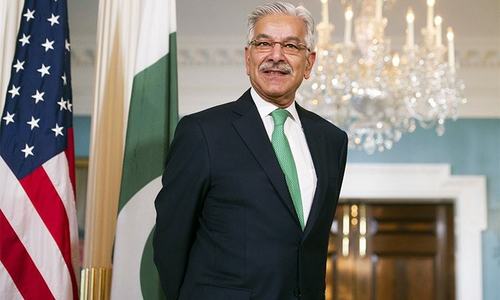
ISLAMABAD: Foreign Minister Khawaja Asif admitted on Monday that Pakistan and the United States had not been able to overcome their trust deficit despite recent high-level interactions.
“We haven’t as yet reached complete understanding. There is still trust deficit,” the minister said while talking to reporters on the sidelines of a Pak-US Track-II meeting hosted by the Regional Peace Institute.
The US and Pakistan have lately engaged each other to avert a rupture in ties following President Donald Trump’s criticism of Pakistan over alleged safe havens while unveiling his administration’s strategy for South Asia and Afghanistan.
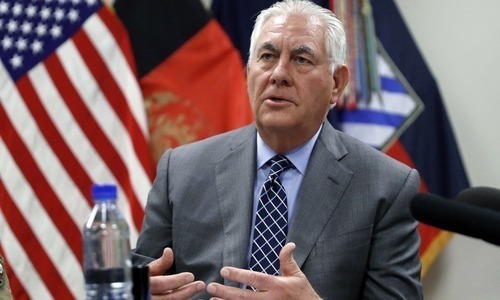
After Prime Minister Shahid Khaqan Abbasi’s meeting with US Vice President Mike Pence, Foreign Minister Asif visited Washington for talks with Secretary of State Rex Tillerson, who later toured Islamabad during his maiden visit to the region.
The US during these meetings gave a list of actions it wanted Islamabad to take, particularly with regards to terrorist safe havens and terror groups. Pakistan, meanwhile, rejected the American allegations about the existence of militant sanctuaries and also conveyed its reservations about the new US policy which, it believes, is detrimental to its interests in the region.
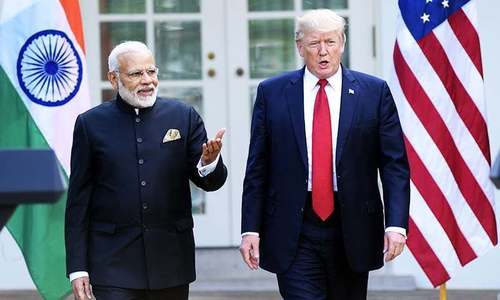
Islamabad worries that the regional role envisaged by Washington for India would add to its security concerns.
Mr Asif noted that Pakistan and the US shared the objective of attaining peace in Afghanistan and that both desired restoration of mutual confidence.
“The contacts are continuing and more high-level visits are coming up,” the minister said, alluding to the impending visit of US Defence Secretary James Mattis. “It is through dialogue that we can agree on a common approach,” he maintained.
The foreign minister said that instead of trading allegations, Pakistan and the US should opt for a cooperative approach for achieving peace, which has so far been elusive.
US Ambassador David Hale, speaking at the inaugural session of the dialogue, said: “The US looks to Pakistan for decisive action against all terrorist groups operating from its soil. … We ask for equal diligence in decimating all the groups operating in Pakistan which threaten the region’s stability, including the Haqqani network.
“We seek a sustained and irreversible effort to achieve an aspiration and commitment made public by Pakistani officials: an end to the use of Pakistan’s soil for attacks on its neighbours.”
On India, the US envoy said Washington saw it as “a leading global power and a strategic partner in the Indo-Pacific region”, adding that the US was encouraging India and Pakistan to resume dialogue.
“The world looks to both countries to safeguard against a nuclear conflict in South Asia,” he said.
Published in Dawn, November 7th, 2017