National Security Committee working group to finalise policy on ties with US


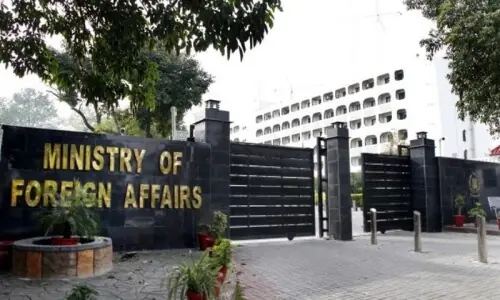
ISLAMABAD: The National Security Committee on Wednesday constituted a working group for finalising policy recommendations on ties with the United States in the aftermath of the newly announced US policy on Afghanistan and South Asia.
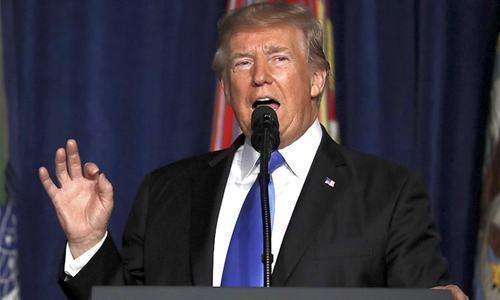
“Trump policy on South Asia was also discussed. The committee decided to set up an interagency sub-committee to make specific proposals for consideration in the next meeting of the NSC,” a statement issued by the Prime Minister’s Office said after the meeting which discussed “internal and external security situation and threats and challenges to national security in the evolving regional and global context”.
A quiet review of relations with the US has commenced with the establishment of the new committee.
The National Security Committee (NSC) met for the third consecutive time in as many weeks and for the second time since President Donald Trump announced his policy.
The NSC serves as the principal civil-military coordination forum on foreign policy and security related matters and met infrequently when Nawaz Sharif was the prime minister.
The committee had at its last meeting given the state’s ‘comprehensive response’ to the new policy. Reactions have been given by different quarters as well, but a strategy for dealing with the US is yet to be crafted.
The new US policy has asked Pakistan to end alleged terrorist sanctuaries on its soil and has linked further cooperation to the progress in that direction. Another point of concern for Pakistan is the greater role being given to India in Afghanistan and the region at large. Trump’s assertion that Pakistan took billions of dollars, but was providing safe havens to terrorists was taken in Islamabad as humiliating and negation of its sacrifices in the fight against terrorism.
The inter-agency committee set up by the NSC would include representatives of various stakeholders. It would consider the recommendations made by forthcoming Envoys’ Conference, which has been specially convened for discussing the new policy; those given by the Senate and the National Assembly, while proposing the strategy on engagement with the US; and the directions given by the NSC.
The Envoys’ Conference, which would be attended by ambassadors from select missions, is being held from Sept 5 to 7.
The NSC further reviewed the Armed Forces Development Plan and decided “to keep a robust defence posture to ensure national security in a challenging environment”.
Published in Dawn, August 31st, 2017