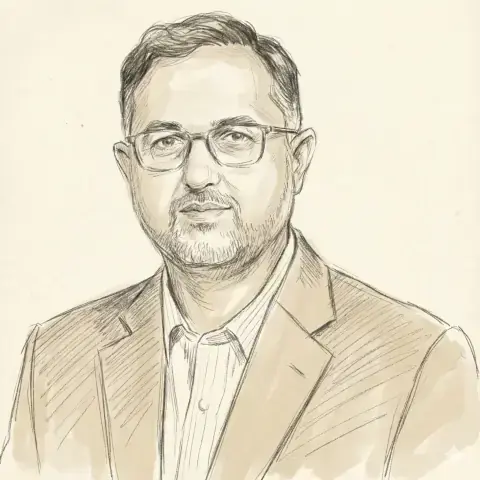
Khawaja Asif to embark on three-nation tour to discuss US policy


ISLAMABAD: Foreign Minister Khawaja Muhammad Asif will next week embark on a three-nation regional tour for consultations on the new American policy for Afghanistan and South Asia.
The dates for the trip, which would take the minister to China, Russia and Turkey, are being worked out.
The decision to undertake the visit was taken at a meeting of the National Security Committee on Thursday, which deliberated on the new US policy and formulated the response.
Foreign minister’s previously scheduled trip to US delayed
The foreign minister’s previously scheduled trip to the US for bilateral talks with his counterpart, Rex Tillerson, has been delayed for the regional tour.
“Foreign Minister Khawaja Asif will be visiting regional countries for consultations,” FO spokesman Nafees Zakaria said at a weekly media briefing.
The consultations would be aimed at developing regional consensus on efforts for peace in Afghanistan.
The regional trip, Pakistani diplomats believe, will send a strong message to the US that Pakistan cannot be coerced and that the country enjoys broad support in the region.
Both Moscow and Beijing have criticised the US position on Pakistan and have insisted that Pakistan’s importance for peace in Afghanistan and its sacrifices in the fight against terrorism need to be recognised.
There have been multiple statements from China in this regard, including one by Chinese Foreign Minister Wang Yi who praised Pakistan’s “great sacrifices” in the fight against terrorism and urged their acknowledgement by the world.
Meanwhile, Russian President’s Envoy to Afghanistan Zamir Kabulov said that Pakistan was “a key regional player to negotiate with” and warned that undue pressure on it could “seriously destabilise the region’s security situation”.
Iran too has joined the countries disapproving the US policy. The Iranian foreign ministry in a statement has denounced the new strategy adopted by the US towards Pakistan and blamed Washington’s opportunistic strategies and unilateral and meddlesome policies for growth in terrorism and extremism in the region.
Mr Zakaria spoke about the fast-paced developments in the region and emergence of new regional partnerships. However, he refused to elaborate how Pakistan plans to position itself in the evolving environment.
FO spokesman underscored that the differences between Pakistan and the US over the new policy did not mean a rupture in ties.
“First of all, we have long-standing relationship with the US. We have worked with the United States for a long time. Our areas of cooperation are diverse and multi-dimensional. I would not endorse your views about parting ways,” he said, adding the “difference of opinion” and “misperceptions” could be addressed through dialogue.
The National Security Committee had a day earlier resolved to “continue to extend all possible cooperation to international community for achieving the common objectives of peace and stability in Afghanistan and in the broader region”.
In reply to a question about the new role assigned to India by the US, Mr Zakaria reiterated Pakistan’s concerns and said that it (India) “plays the role of a spoiler and destabiliser in the region, and also uses Afghan soil against Pakistan”.
Proof in this regard, he said, had already been shared with the international community and the government “will continue to take up this issue both with the US and Afghan leadership”.
Published in Dawn, August 26th, 2017