0
0

ISLAMABAD: Pakistan reacted furiously to the execution of Bangladesh Jamaat-i-Islami’s chief Motiur Rahman Nizami over his role in the events of 1971, with the Foreign Office noting that his only crime was his loyalty to Pakistan before the secession of its eastern wing.
“Pakistan is deeply saddened over the hanging of the emir of Jamaat-i-Islami Bangladesh, Mr Motiur Rahman Nizami, for the alleged crimes committed before December 1971. His only sin was upholding the constitution and laws of Pakistan,” the FO said in a statement on Wednesday.
Mr Nizami had been sentenced to death by a special tribunal trying those who had been accused by the Bangladeshi government of war crimes during the events of 1971.
He was convicted in 2014 on eight counts, including mass murder, torture, rape and arson. He denied the charges and his final appeal against the 2014 conviction was rejected last week.
The FO statement recalled the flaws in the 1971 trials, saying, “Ever since the beginning of the trials, several international organisations, human rights groups and international legal figures have raised objections to the court proceedings, especially regarding fairness and transparency, as well as reported harassment of lawyers and witnesses representing the accused”.
Amnesty International condemned Nizami’s execution, saying it was unfortunate that it took place after “a flawed process”. Human Rights Watch and human rights groups have also raised questions about the trial standards.
Nizami was the fifth opposition leader to have been executed after being sentenced by the war crimes tribunal that were set up in 2009. Three of them, who were executed before Nizami, belonged to Bangladesh’s Jamaat-i-Islami, while the fourth was from Bangladesh Nationalist Party. Another accused, who also belonged to Jamaat-i-Islami, died while his appeal against conviction was being heard.
The FO statement said: “The act of suppressing the opposition by killing their leaders through flawed trials is completely against the spirit of democracy. The execution is also unfortunate for the people of Bangladesh who had elected Mr Nizami as their representative in the parliament.”
As is the standard practice with FO protests on 1971-related executions in Bangladesh, it urged Bangladesh to honour the 1974 Tripartite Agreement, under which Dhaka had “decided not to proceed with the trials as an act of clemency”.
“The Government of Bangladesh therefore should uphold its commitments as per the Agreement,” the statement concluded.
National Assembly
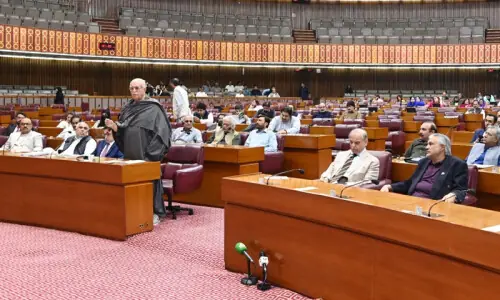
The lower house, on Wednesday, also passed a unanimous resolution condemning the execution of Motiur Rahman Nizami.
“The people being executed in Bangladesh did not commit any crime under the law and constitution of that time,” Pakistan Muslim League-Nawaz leader Khawaja Saad Rafique noted in his speech on the topic.
“How can you sentence someone for a crime after 45 years?”, he asked, adding that “Haseena Wajid’s blood-thirsty government is not satisfied.”
He called for a special committee to be constituted over the issue and called on the Foreign Office to become proactive in the matter.
“The Haseena Wajid government is not popular in Bangladesh, and the measures she is taking will hurt her own country. Sheikh Mujibur Rehman’s daughter is sowing thorns between Pakistan and Bangladesh. This is not a Bangladeshi matter alone, Pakistan is inextricably linked with it,” the railways minister said.
Sher Akbar Khan, Sahibzada Mohammad Yaqoob, Ameer Zaman, Shahjee Gul Afridi, Chaudhary Mohammad Ashraf, Mian Abdul Manan, Tahira Aurangzeb, Maulana Gohar Shah, Chaudhary Bashir Virk and Sardar Awais Leghari also condemned the executions.
A number of members also called for severing diplomatic relations with Bangladesh over the incident.
Published in Dawn, May 12th, 2016