KARACHI: The China-Pakistan Economic Corridor (CPEC) is not a single road, it’s a network. It will spur the growth of industrial zones supported by energy plants, connecting Kashgar in China to Gwadar. Balochistan should be the primary beneficiary of the project. Khyber Pakhtunkhwa will also benefit from it as there’s no discrimination against any province.
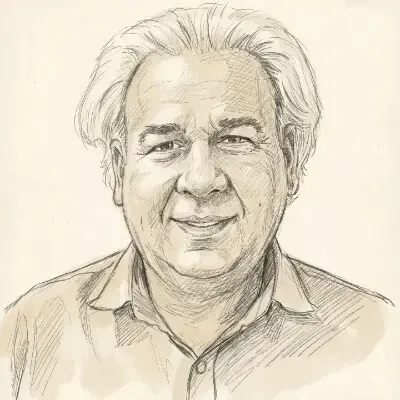
These were some of the points raised by Masood Khan, director general of the Institute of Strategic Studies, Islamabad and Pakistan’s former permanent representative to the United Nations in a lecture titled ‘Pakistan: security challenges and opportunities’ in the library of the Pakistan Institute of International Affairs on Wednesday.
Know more: Nawaz chairs APC to allay China-Pak corridor fears
Before his talk, Mr Khan expressed his sadness at the tragedy that had taken place in the city in the morning in which 43 members of the Ismaili community were murdered in a bus. He termed the dastardly act “a sad day in our history”.
Mr Khan commenced his lecture by focusing on national security underlining four important things — ideology of Pakistan, sovereignty and territorial integrity, social and economic development and development of democracy.
Drawing parameters for that he said, “National security is human security,” a synthesis of aspirations and intentions of the people of Pakistan where “people are the centre”. National security, he said, depended upon internal and external environments.
Highlighting the internal factors, he said terrorism was an immediate and existential threat while extremism, ethnic and religious violence, insurgency in some parts of the country and syndicates of transnational and regional crimes too fell into that category. He raised the question whether Pakistan’s ideology was under threat and replied himself, “Yes”. Validating his answer, he mentioned the sources from where the threat was imminent — countries that had not accepted Pakistan and forces within Pakistan who either did not want its ideology as it was conceived before 1947 or wanted a different interpretation of it. The latter included violent extremists as well as ultra liberals. Sovereignty was also under threat, from time to time, as drone attacks were one manifestation of it, he added.
Speaking on the external elements, he touched upon neighbouring countries. He said volatility along the Line of Control was an issue; Jammu and Kashmir was a disputed territory and India and Pakistan had different opinions on it. There was conventional asymmetry between India and Pakistan, but Pakistan’s “nuclear deterrent is effective”. He called Iran a conundrum as there was a “simmering-down” when it came to the nuclear issue, but “heating-up” vis-à-vis Yemen. He claimed operation Zarb-i-Azb was succeeding because security forces were taking on extremists throughout the country. However, he admitted, the success was partial. Democracy, he commented, and democratic institutions were yet to take root.
Mr Khan said Pakistan’s relations with China were strengthening, and referring to the ‘one belt, one road’ project he called it a “grand plan”.
Expanding on the friendly ties between the two nations, he remarked, “Poetry is as important as prose.” Describing poetry he said “our friendship was higher than mountains and sweeter than the sweetest honey, etc” and explaining the latter identified economic and political transactions as its components. He said the China-Pakistan Economic Corridor was going to happen and Pakistanis should prepare themselves for it. He described it as a win-win partnership. In order to remove other nations’ misgivings, he asserted, “We want to steer nations away from competition to cooperation.” He stressed that the corridor was not one road, but a network, which would enhance Pakistan’s capacity in different sectors of development. “It would have a profound impact on the economic growth of Pakistan,” he said, calling it a destination and a pathway for many services.
On the subject of India, Mr Khan said since 1971 Pakistan had made many overtures to India most of which had gone wasted. By and large, Pakistan had been proactive but India had never wanted Kashmir as an item on the (negotiation) table. He mentioned the impression was that Pakistan was guilty. Hypothesising, he argued even if Pakistan capitulated on Kashmir, India’s hostility would remain. “Modi will continue with his aggressive posture against all his neighbours,” he said and advised “Pakistan should deal with India with dignity. Don’t go back on Kashmir even if India is reluctant or evasive about it.”
With reference to Pakistan-Afghanistan relations, Mr Khan said they had entered a new phase. Pakistan reciprocated president Ashraf Ghani’s warm gestures, making a fresh beginning because now there were “no good or bad terrorists”.
He also briefly talked about the positive economic indicators suggesting it was a good time for Pakistan, adding that owing to the CPEC confidence of the world in Pakistan’s economy had grown. Drawing the audience’s attention to Pakistan’s strengths, he said it had a geo-strategic importance, operation Zarb-i-Azb was succeeding which had made a major difference and democracy was taking root. He said some people believed that terrorism should be eliminated from society first after which efforts should be made for economic growth. In his opinion, it could happen simultaneously.
After the lecture the floor was opened for a question-and-answer session. Replying to a query on provinces’ reservation about the CPEC, Mr Khan said it’s not a single road or one link but a network; an access was being developed which would cause a mushroom growth of industrial zones, connecting Kashgar to Gwadar. He clarified that Balochistan would be the primary beneficiary of the project; KP would too benefit from it. “Some would be early harvest projects while others would reap dividends later.”
On Narendra Modi’s intended cricket diplomacy, Mr Khan said, “If he makes an overture it’s bound to succeed. To what extent, I don’t know.”
Responding to the question on Pakistan’s involvement in the current Middle East crisis, he said it was a millstone around our neck. We should have invested in economic policies there. It’s our prerogative to pursue a balanced foreign policy in the region. He predicted, “The situation in the Middle East is likely to deteriorate.”
Published in Dawn, May 14th, 2015
On a mobile phone? Get the Dawn Mobile App: Apple Store | Google Play