0
0

NEW DELHI: Five suspects, their faces covered with woollen caps, arrived in a special fast-track New Delhi court on Thursday for the start of their trial for the rape and murder of a young woman on a bus last month.
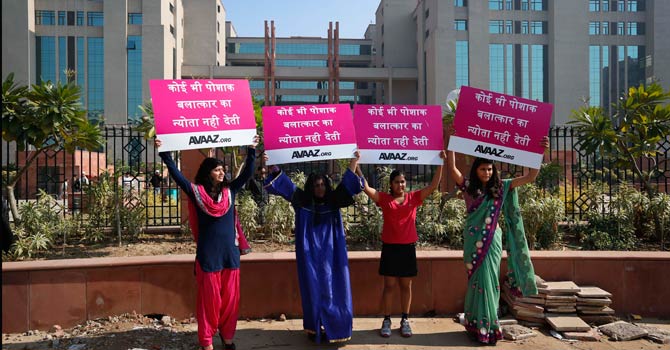
Police were on alert outside the sprawling court complex in south New Delhi as the suspects arrived. Inside the court, about 30 policemen blocked access to the room where the trial was to be held, while scores of journalists and curious onlookers crowded the hallway. The case had triggered outrage and questions over the treatment of women in India's justice system.
The suspects were whisked into the courtroom by a phalanx of armed policemen for the start of the trial, although there were no immediate details released. The court is to hear opening arguments by the prosecution and defence lawyers. The trial will be conducted in a closed court room after Judge Yogesh Khanna denied a defence motion to make the proceedings public.
A sixth suspect says he is a juvenile and is expected to be tried in a juvenile court.
Police say the victim and a male friend were attacked after boarding a bus on December 16. The attackers beat the man and raped the woman, inflicting massive internal injuries with a metal bar, police said. The victims were dumped naked on the roadside, and the woman died two weeks later in a Singapore hospital.
The trial began a day after a government panel recommended India strictly enforce sexual assault laws, commit to holding speedy rape trials and change the antiquated penal code to protect women.
The panel appointed to recommend suggestions to overhaul the criminal justice system's handling of violence against women, received a staggering 80,000 suggestions from women's and rights groups and thousands of ordinary citizens. Among the panel's suggestions was an end to political interference in sex crime cases. It has also suggested the appointment of more judges to help speed up India's sluggish judicial process and clear millions of pending cases.
Law Minister Ashwani Kumar said the government would take the recommendations to the Cabinet and Parliament. ''Procedural inadequacies that lead to inordinate delays need to be addressed,'' he told reporters.