0
0

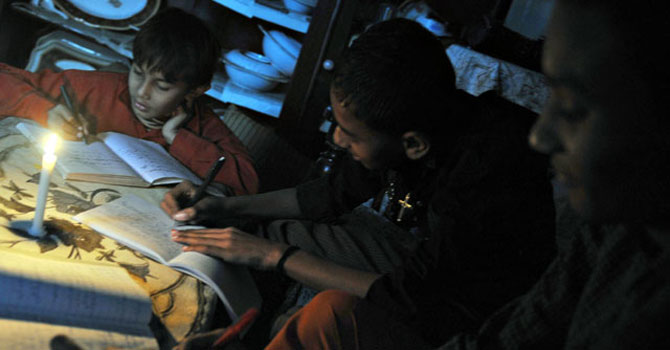
ISLAMABAD, Nov 29: With no signs of recovery despite over 100 per cent tariff increase, the entire electricity sector was a slide downwards during 2012 owing mainly to monetary indiscipline shown by all the stakeholders and the ongoing load-shedding seemed unlikely to end before 2020.
In its “State of the Industry Report 2012”, the National Electric Power Regulatory Authority said on Thursday that the year continued with miseries to the consumers as “there was no respite for them from long, scheduled and unscheduled hours of load-shedding resulting in the riots and protests by angry crows storming the streets all over the country”. Barring a few positives, “the power system is in total disarray. There are technical and financial issues to resolve”. Essentially it is not the installed capacity that is needed as installed generation capacity in the system was 23,578mw whereas at any given time the available capacity remained less than 14,000mw, the report said.
It resulted in forced shutdown of large number of industrial units, leading to unemployment of workforce particularly in Punjab. Despite 3,000mw of new generation, there was a large quantum of suppressed demand that outpaced new addition to generation. “It is feared that the gap between supply and demand would continue to widen, as the current plans would not be adequate to meet the needs of the sector even around 2020”. It said a review of future requirement and supply position showed that by 2015, the overall demand at peak hours at the country level would be around 26,000mw, for with generation capacity should be closer to 36,000mw after allowing for reserve capacity, an increase of 12000mw in three years.
“With the current expansion plans and progress on implementation of ongoing projects, it is expected that the crisis in the power sector would continue well beyond 2020, unless major hydropower plants and based load power generation on coal are inducted”.
It said the absence of monetary discipline among the stakeholders resulting into breakdown of chain of payments and build up of colossal circular debt at present was the most damaging of all factors hurting the power sector.
Besides the circular debt, the performance of distribution companies remained below par during the year as their losses remained in the range of 30-40 per cent. “A high percentage of theft is also part of these losses”.
The loss-making companies also have low recovery rates, resulting in revenue shortfalls as distribution companies have not been able to improve their performance due to lack of administrative and financial independence.
Nepra said the reforms to have independent board and chief executives of power companies were stalled because of opposition from the workforce owing to centralised role of Pakistan Electric Power Company.
It felt that the prime objective of Pepco to lead the unbundling of Wapda into independent financial units. However, by maintaining status quo mainly due to Pepco’s central role, the progress on reforms was negligible even after more than a decade of its creation.
The report said the performance of generation companies in terms of their capacity and availability further declined over the last year. The new capacity additions could not be utilised due to constraints in fuel availability and timely payments as overall availability of plants further deteriorated over 2011. The gap between demand and supply in Wapda system went over 6000mw market.
“The gap representing about one third of total demand in Pepco system forced one third of electricity consumers to remain without electricity over a 20 hour period”.
It said the performance of KESC has been mixed. While it showed improvement in operational performance by reducing tripping and outages, it could not bring down its distribution losses that hover around 35 per cent.
“Similarly, the KESC is always criticised for not operating its own power plants while preferring importing from national grid”.
“KESC is guilty of not providing electricity to its consumers although it has the possibility of supplying them. Additionally, it is uneconomic at the national level to operate inefficient power plants in NTDC system while relatively more efficient power plants in the KESC system are kept non-operative”.
During the year, a large part of Karachi was regularly disturbed due to worst law and order situation in areas like Orangi Town, Korangi, Baldia, Lyari, SITE, Malir, Shah Faisal etc., causing long delays in rectification of faults, installation of new connections and system improvement in non-compliance with Nepra standards.