ISLAMABAD: Pakistan Tehrik-i-Insaf (PTI) on Friday unveiled its economic plan which envisages more then doubling the growth rate of economy through investment and trade driven growth strategy.
It foresees significant reduction in current back breaking levels of inflation, creation of ten million new jobs over five years and to move Pakistan to ideal of a sovereign welfare state where fruits of development are shared by the entire nation and not just the elite.
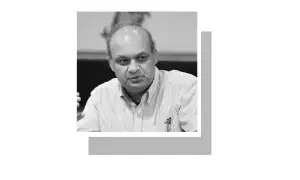
PTI Senior Vice President Asad Umar, while presenting the policy compared the growth of Pakistan with other countries, he said, “Pakistan’s solution is not administrative, it is political.”
The PTI leader castigated Federal, Provincial governments for misplaced priorities, incompetence and greed.
He pledged to improve livelihoods of the masses, create jobs for youth through a radical reforms program.
A five-pillar emergency reforms program has been drafted in consultation with key stakeholders including businessmen, academics, technical specialists, labor unions, farmer associations and the youth, said Umar.
Despite momentous challenges ahead, the PTI’s reforms program will not only rescue crumbling state but also meet aspirations of citizens, particularly youth, he said.
He said that last five years have been unmitigated disaster for the people with status quo ruling parties (PPP, PML-N, allies) setting new records of bad governance and incompetence.
The PTI leader said that average growth of three per cent in last five years is lowest growth period in Pakistan’s history. In same period India, Bangladesh and Sri Lanka posted growth rates more then double of that of Pakistan, he added.
The Five-Pillar Emergency Reforms Program of the party will address critical challenges facing Pakistan today and break free from vicious cycle of low growth, high inflation, rising poverty, said Umar.
It aims at deep institutional reform and takes on powerful entrenched vested interests head on to break status quo.
He said that energy reforms are focused on reducing cost of producing electricity from indigenous resources. It will resolve circular debt and make Pakistan an energy secure state.
Umar said that expenditure reforms include shutting down of PM, CM & Governor Houses, slashing budget for the Presidency by 50 per cent, reducing ministries to 17 from 37, abolishing free and subsidized plots, reducing spending by all state institutions including the armed forces and releasing funds for welfare of the citizens.
Tax all incomes regardless of source and create just, equitable tax system, impose minimum asset tax adjustable against income already paid, end soft amnesty schemes, Umar suggested.
He said that provincial governments must take responsibility, collect property and agriculture tax from large landholders. Revamp FBR and make it autonomous insulated from political pressures.
Reforms will increase tax revenue to 15 per cent of GDP in 2018 from 9.9 per cent in 2012, he suggested.
Carry out deep reforms that make state institutions empowered, accountable and transparent, he said.
Devolve power from central, provincial capitals and empower local communities at grass roots level.
The PTI senior vice president recommended forming a special task force to recover looted national wealth stashed outside the country. All recovered assets of corruption will be used for educating the youth of the country, he said.
He said that there will be only one standard modern education system for all Pakistanis.
He said that the party will increase education spending by five folds to Rs 2,195 bn by 2018 to achieve 80 per cent enrollment.
Umar said that the party will introduce free health care system for poor and spending pn health will be increased by five folds to Rs 1,142bn by 2018.
He said the PTI’s economic policy envisages indigenous investment and trade driven growth strategy for sustaining a welfare state. It targets to ramp up investment spending to 21.4 per cent of GDP by 2018 after collapsing to 12.4 per cent under current rulers.
The PTI leader said that investment will be ramped up by resolving energy crisis, increasing credit access to private sector credit by reducing crowding out by large government borrowings, bringing down interest rates and by placing special emphasis on inviting overseas Pakistanis to invest in Pakistan.