0
0

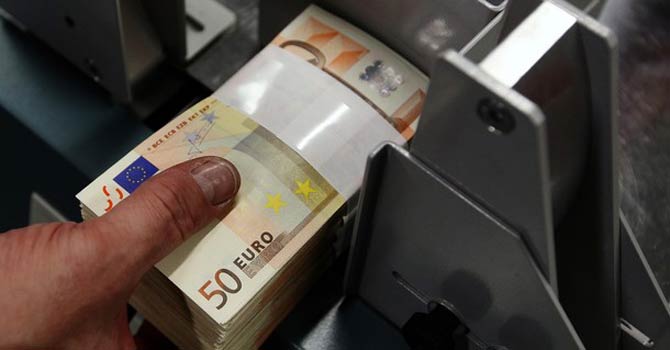
TOKYO: The euro's rally fizzled in Asian trade on Monday, after the beleaguered unit surged last week on a surprise deal by European Union leaders to help stem the continent's debt crisis.
The common currency eased to $1.2624 and 100.68 yen in Tokyo afternoon trade from $1.2654 and 101.02 yen in New York late Friday.
The dollar was quoted at 79.75 yen, slightly weaker from US trade, as the Bank of Japan published a stronger-than-expected business sentiment survey, offering some positive news for the world's third-biggest economy.
Risk appetite improved following the deal aimed at easing concerns over the euro bloc's debt and banking problems, said Daisaku Ueno, senior foreign exchange and fixed income strategist at Mitsubishi UFJ Morgan Stanley.
“With the unexpected good news, I think it will be a day of improved risk appetite,” he told Dow Jones Newswires.
However, with details of the deal yet to be finalised, “more bumps and detours are expected”, he added.
European leaders agreed to use emergency funds to support ailing banks directly and to ease pressure on governments' debt burdens through bond purchases.
The deal also called for the injection of 120 billion euros ($150 billion) of stimulus money into the suffering 17-nation eurozone economy, but questions about details and implementation remained, dealers said.
“After an initial bout of delight, markets settle into a cautious optimism this morning,” National Australia Bank said in a note.
“The European Summit concluded without agreement on the long-term details (fiscal union etc), but did offer relief for Spain and Italy with direct bank funding from the (the European Stability Mechanism rescue fund).”
The bank said the agreement was “positive, but there are questions about how long this takes to establish”.
“There remain problems in Europe, but for now, EU leaders have bought a little more time. Hopefully it is enough.”
The dollar was lower against other Asia-Pacific currencies.
It fell to Sg$1.2685 from Sg$1.2700 on Friday, to Tw$29.85 from Tw$29.87, to 1,143.05 South Korean won from 1,145.00 won, and to 41.97 Philippine pesos from 42.23 pesos.
It also fell to 9,393.00 Indonesian rupiah from 9,478.00 rupiah, to 31.63 Thai baht from 31.80 baht, and to 55.66 Indian rupees from 56.33 rupees.
The Australian dollar firmed to US$1.0227 from US$1.0176, while the Chinese yuan edged up to 12.53 yen from 12.49 yen.