1
1

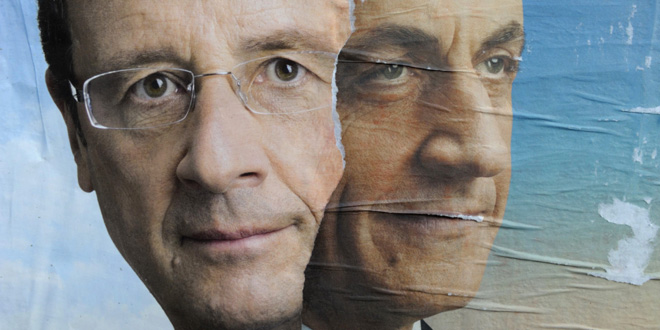
PARIS: As French voters prepare to choose the leader they feel best reflects their ideals, some foreign residents see a country where fear of the future is undermining its ideals of equality and fraternity.
A former imperial power and global centre of ideas and culture, France has attracted a huge immigrant population keen to share in its dreams, but with the country in decline, many natives rub along uneasily beside relative newcomers.
Foreign-born residents sometimes accuse the French of racism or snobbery, but blame this on the nervous uncertainty the French feel in a changing world.
“This country is an ideal for many,” said Jamal Sow, a 35-year-old student from Mauritania who is working on a doctoral thesis at the Sorbonne on the essence of man.
“In France there is intellectual wealth and political stability that makes for a great democracy. That is a welcome break from having a coup d'etat every four or five years,” he said.
“But when you are here you realise that it is difficult to find a job or a place to live,” explaining that he was at one point reduced to “scavenging in bins” to feed himself.
He sees in the French a sort of “tenseness, an anguish” that is much stronger now that it was nine years ago when he arrived.
Four million people are unemployed in France and everyone has the feeling “that you can lose your job from one day to the next”, he said.
Foad Saberan, an Iranian-born psychiatrist who grew up in Tunisia and now works in Paris, says he too sees a fear of loss of status or of exclusion.
“People in their fifties feel like everything could just fall apart,” he said. This can lead to a “certain nervousness” when dealing with outsiders that can result in their exclusion or a hunt for scapegoats.
“Some people rail against national solidarity, against the unemployed who get dole money, against the state which financially supports the lazy. There is growing pressure on the weak, the marginalised,” said the 70-year-old.
“For a time this was directed at the Communists or the unions. But in recent years it has been directed at the North Africans, the Roma,” he said.
For many, the anti-immigrant diatribes heard in the presidential election campaign can reflect a sort of imagined hatred that they themselves do not experience in their daily lives.
“France is a country where you can talk without looking over your shoulder,” said Ahmed, 35, a Moroccan market gardener whose three children were born in Paris.
“Life is hard, you have to struggle, but here our children can themselves decide what they want to do with their lives,” he said.
But for Salome Anaba, a Cameroonian primary school assistant, the French dream of a more egalitarian society did not live up to its promises.
“Liberty, equality, fraternity is an empty slogan,” she said.
“It is true for the rich, a tiny minority, but not for the others. This society is unjust. With the same qualifications, a black man from the suburbs has less chance of getting a job than a white Parisian.”
Tess Espinoza, 38, a Filipino nanny, wonders about what she sees as the schizophrenia of French society.
She has positive memories of the four childbirths she had in a hospital in Paris but she has been marked by the “violence” of which the state is capable.
“One day, my entire family was taken off in a police van because of some document my husband had failed to produce. My seven-year-old son is still traumatised,” said Espinoza.
Tudor Vaideanu, a Romanian-born dentist, still sees France as a land of opportunities. One of his compatriots was recently snapped up by a teaching hospital in the northwestern city of Brest which urgently needed an orthopaedic surgeon and “the question of nationality was not raised.”
But then, as the Mauritanian student Sow said: “It is far easier for white people.”
“France is not a racist country. But there is a problem of representation of minorities. You see them in political parties, unions, in the civil service. France is cosmopolitan. But at the top, you do not see this plurality.”
Saberan said that he was struck when he arrived in France in 1961 that “this was the country of liberty, of Victor Hugo, and at the same time it was a colonialist state bogged down in the Algerian war.”
The first round of France's presidential election will take place on Sunday. Opinion polls show that Socialist candidate Francois Hollande is on course to oust right-wing incumbent Nicolas Sarkozy.