0
0

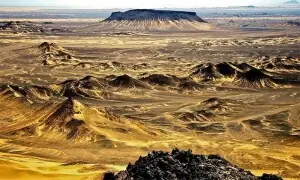
The Salt Range is a special place, famous for its unique and fragile landscape. The region is rich in natural resources and has an abundance of saltwater lakes, home to migratory birds from Siberia in winters. In recent years, however, the villagers have cut down the forest cover in the surrounding hills, affecting the watershed areas and lowering water levels in the region.
Deep inside the Salt Range is a picturesque valley called the ‘Soon Valley’. The average elevation of the valley is 2,000 feet above sea level and it is moderately populated with a high literacy rate. Approximately 60 per cent of the population is engaged in farming. The Soon Valley is known for growing vegetables like cauliflower, which are sold by the farmers at prices that brings in the inflow of cash into the valley. These vegetables, however, also use up a lot of precious water and in the last ten years or so, the Soon Valley Development Organisation (SVDP), a local NGO, has been teaching farmers how to conserve water and improve the water table.
In 2003, alarmed by increasing water scarcity, the SVDP started organising small farmers of the valley into Farmers Organisations to sustainably manage ground water resources and execute conservation projects such as piped irrigation, sprinkler irrigation, drip irrigation, rain water harvesting ponds, safe water drinking schemes and biogas. In the past year they have received funding from the UNDP’s Grass Roots Initiative Programme (GRIP) to focus on watershed management. The GRIP funding was used to rehabilitate the watershed and rangeland area of seven villages of the valley. The watershed area includes reserve forest, rangeland and private lands.
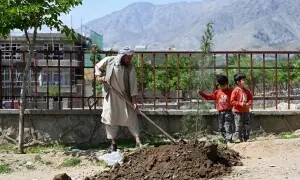
In the past 10-15 years, the watershed and rangeland in the valley have degraded due to drought from 1997-2002, deforestation, loss of vegetation cover, forest fires, mining and soil erosion. Malik Farooq, a local villager in Siddiquabad, says, “With GRIP money we have built check dams and water ponds. The check dams slow down the rainwater that falls in the hills nearby and this helps the underground water level to go up. Otherwise the water would just rush into Ucchali Lake located below the village”. The check dams also prevent flooding down below, which often occurs during the monsoon rains.
Ucchali Lake’s salty water cannot be used by the villagers. It is, in fact, an ideal wetland for migrating pink flamingos who flock there in winters.
Siddiquabad village was selected by the project since it has the highest number of tube-wells in the valley and the most amounts of degraded rangelands. GRIP provided the shovel extractors and cement to build the check dams and the rainwater harvesting ponds (for use by livestock). Other interventions included building water and vegetation conservation contour walls, plantation (of indigenous species), seeding and grassing.
These activities were carried out in six other villages as well, and in each village the local community was involved in the planning, implementation, monitoring and evaluation of the project that has now been completed. “We provided a lot of the labour and took ownership of the project,” explained Malik Farooq. The project was only designed after consultations with the community. “We can see the benefits already — the aquifer here is very shallow and with the recent spell of winter rains, more water is coming out of the tube-wells. This means that the water table is going up”. Now all the other villages want these check dams and water ponds to be made in their watershed areas as well. “Other villagers say this is important work and that they need it as well. This is really our last effort to save our water resources”.
The project also created awareness through workshops, sensitising the villagers about the need to conserve the rangelands.
For example, they arranged livestock workshops in the main town of Noushera, where they taught local villagers about the various illnesses affecting their livestock (goats, cows and buffaloes) and made the linkages with improved rangelands and water availability. “We also held environmental events at schools, teaching children about the importance of the forests and water,” pointed out Malik Khair Mohammed, a member of the local village organisation. “Health and hygiene sessions were also conducted during women’s meetings.” He further added: “People are aware now that they need to save their watersheds.
In Khura village the elders do not allow any tree cutting in the area and hence it has the best forest now. They did this because their water level was the lowest in the valley”.
Large-scale deforestation in the Salt Range was mainly due to forest fires and woodcutting for fuel since there is no provision of gas in this area. Nowadays there are hardly any forest fires and the people are very careful about cutting whole trees. The ground water resources of the Soon Valley have depleted very fast during the last 15 years. In 1995 the average water table was at 30 feet whereas now it has gone down on average from 80 to 130 feet. The aquifer of the valley is limited in thickness and extent and is not more than 150 metres in depth.
The villagers say that because of climate change in recent years, they have had to change their cropping patterns as well. The winters are shorter, which damages the wheat crops. The summers are longer with extreme heat and the rains more erratic and intense. The villagers have decided to grow more potatoes now since they require 50 per cent less water than cauliflower.
The SVDP imported the seeds for these new potatoes from the Netherlands and after a successful trial period they were introduced to the valley.
The SVDP have also planted peach trees and grapes and are starting to grow organic onions to cater to the large organic market in nearby Islamabad (located around two hours drive away on the Motorway). The Director of the SVDP, Gulbaz Afaqi, can be credited for bringing about such innovations in a remote corner of the country. He has set up an Organic Farming Research Station in Ucchali and hopes to one day convert all the farmers in Soon Valley into organic producers. It might be an ambitious dream but given his track record in Soon Valley, Gulbaz Afaqi is certainly allowed to dream big.