0
0

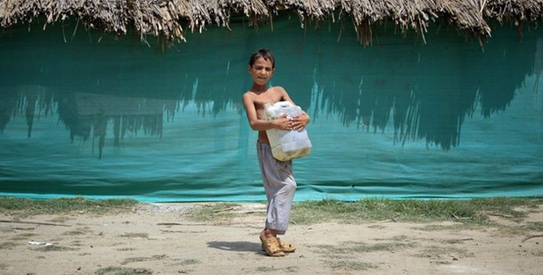
PESHAWAR: The Khyber Pakhtunkhwa government believes that the province is no more up on the ladder of areas around the world with a 'chronic crisis' of internally displaced persons (IDPs), say officials.
The government, according to officials, has informed UN relief agencies that Khyber Pakhtunkhwa has around 102,000 displaced families (470,000 persons), clarifying that the figure of IDPs in their use for planning purposes is outdated.“Khyber Pakhtunkhwa sitting, somewhere, on the top of the list of places with chronic IDP crisis is no more the case, as things have improved much in the recent past,” said Shakeel Qadir Khan, director general Provincial Disaster Management Authority (PDMA), Khyber Pakhtunkhwa, adding that “we are likely to be somewhere in the middle of it (list).”
The PDMA, according to its chief, carried out a survey in September and October this year after realising that the figure of 1.1 million IDPs used by international organisations for planning purposes was not a true representation of situation on ground.
International community had described the IDP crisis in Khyber Pakhtunkhwa as chronic in 2009 after a mass displacement from Malakand division due to insecurity and military operation against Swat's Taliban.
Later, displacements from the Federally Administered Tribal Areas, including Bajaur, Kurram, Mohmand, Khyber and South Waziristan agencies because of militancy raised the IDP number to 4.4 million.
The PDMA chief said situation began improving by mid-2010 and more than 2.4 million IDPs returned, leaving the authority and its partners to take care of 1.1 million IDPs staying at camps.
According to the findings of the PDMA survey, the province has around 470,000 displaced persons as the average size of an IDP family comes to be 4.7 persons.
Mr Shakeel said UN agencies, too, favoured the conducting of the survey.
“International agencies have been looking at a year old figure of 1.1 million IDPs for planning relief activities. It is no more valid,” he said.
The PDMA chief said the government had told international organisations that if it declared any area 'safe', then they should not contest it.
“We told them that when we say Bajaur is safe, then the information should not be questioned and we should be assisted in the rehabilitation of those who have returned,” he said.
According to Mr Shakeel, the PDMA's international donors have okayed the updated figure of 102,000 displaced families as it was collected at the village level to know those who had returned and those who continued to live in camps.
He said a majority of the remaining IDPs were staying in camps, including Jalozai camp near Peshawar, Benazir camp at Risalpur near Mardan, Durrani camp at Sadda in Kurram Agency and Saafi camp in Mohmand Agency.
The PDMA chief said the exercise was necessary as the provincial government wanted the UN agencies and other donors to focus more on the rehabilitation of those who had returned.
“We want international organisations to focus on the rehabilitation process,” he said, adding that “we have asked them that instead of giving IDPs free lunches at camps, they should focus on the affected persons' resettlement in their respective areas.”
Mr Shakeel said the government was anticipating that the number of IDPs living in camps would remain around the 400,000 figure for quite some time.
“The next year's projection is also of 400,000 IDPs,” he said, adding that some of the existing IDPs were expected to return in next couple of months and that Bajaur Agency's remaining 800 plus families of IDPs staying at Jalozai camp might go back in near future.
“In case of North Waziristan agency, we might see more IDPs if the military launches a crackdown and the current operation against militants goes on in Khyber Agency for some more time,” said the PDMA chief.