6
6

NAGPUR: With 28 league games completed, we are exactly two-thirds into the World Cup qualifying stages. We take a look here at how the nine test-playing nations are shaping up, primarily on their tournament form displayed so far (see also notes below).
Terms: Economy or run rate = Runs per over Average = Runs per dismissal Strike rate (batting) = Runs per 100 balls Strike rate (bowling) = Balls per wicket
Australia Strengths: Batting: Preserving wickets (average of 52.1 runs per dismissal and 182.0 runs per dismissal during powerplays) High run rate overall (5.6 runs per over) Bowling: 4.2 runs per over and 16.7 balls per wicket in powerplays Fast bowling: 3.9 runs per over and 22.8 balls per wicket Highest number of catches per innings: 5
Weaknesses: 5.2 runs per over scored during powerplays Bowling: 32.4 balls per wicket Spin bowling: 85.7 balls per wicket - -
Bangladesh Strengths: First (mandatory) powerplay: 5.8 runs per over Only 6% of runs conceded as extras
Weaknesses: Batting: average opening partnership (43.0 runs per dismissal); poor run rate overall (4.6) Powerplay while batting: Poor runs per dismissal (21.9); poor run rate (5.4) Powerplay while bowling: Poor average (42.9 runs per wicket); poor economy (5.3) Most number of run outs so far (5) Bowling: Poor strike rate (37.7 balls per wicket); poor economy (5.3) Fast bowling: Poor economy (5.6) and strike rate (40.9) Spin bowling: Poor economy (5.0)
England Strengths: Openers: Good strike rate (97.6) Only 1 run out conceded so far
Weaknesses: Lower middle order: Poor average (10.8) Losing too many wickets during the batting (third) powerplay (13.2 runs per dismissal) with poor run rate (6.40) Bowling: Poor economy (5.5); poor strike rate (36.0) Powerplay while bowling: Poor economy (5.7) Fast bowling: Poor economy (5.5) and strike rate (37.3) Backup bowlers: Poor economy (5.1), average (184.0) and strike rate (216.0) Extras: Highly profligate (98 runs) with the highest extras (33) in any innings twice
India Strengths: Batting: High run rate (6.1); high average runs per dismissal (46.2), High openers' strike rate (112.0) High powerplay run rate (6.2) Strike rate: Fast bowlers (22.3); backup bowlers (42.8) Fielding: Catches (16) and run outs (4)
Weaknesses: Bowling: Poor economy (5.2) and average (27.5) Poor powerplay economy rate (5.5) Spin bowling: Poor economy (5.0), average (55.5) and strike rate (67.0) High number of run outs conceded (4)
New Zealand Strengths: Openers: High average runs per dismissal (79.0); high partnership average (66.5) No run outs conceded so far Bowling: Very good average (19.1) and strike rate (26.5), powered by fast bowling and backup bowlers Best spin bowling economy (2.3)
Weaknesses: Middle order: Poor average (33.6) Poor spin bowling strike rate (90.0) High percentage of extras conceded (9.4%) - -
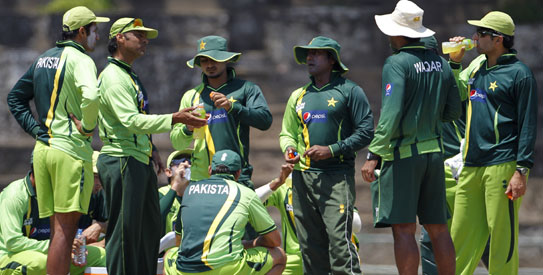
Pakistan Strengths: Lower middle order: High average (28.0) and strike rate (94.2) Spin bowling: Good economy (4.1) and average (16.7)
Weaknesses: Batting: Poor average (28.5) and run rate (5.3) Openers: Poor average score each (11.6), strike rate (62.4) and partnership average (15 runs) Middle order: Poor strike rate (74.6) Powerplay while batting: Poor average runs per dismissal (27.3) Powerplay while bowling: Poor average runs per wicket taken (28.4) Backup bowlers: Poor economy (5.1) and strike rate (57.0) High extras as a percentage of runs scored (11%) Low number of catches per innings (2.3)
South Africa Strengths: Middle order: Good average (60.7) and strike rate (93.1) Overall bowling: Good economy (4.0) and strike rate (25.6), especially during powerplays Fast bowling: Very economical (3.7) Spin bowling: Good strike rate (19.2) High number of catches (4.7) per innings
Weaknesses: Openers: Poor opening stand average (43.0) and strike rate (73.8) Poor run rate while batting (5.3), especially during powerplays (5.2) Poor fast bowler strike rate (36.4)
Sri Lanka Strengths: Batting: Good run rate (6.0) and average (46.8) from openers, middle order and lower middle order# Powerplay while batting: Good run rate (6.4), predominantly due to mandatory powerplay Spin bowling: Good economy (3.8), average (13.6) and strike rate (21.3) Backup bowling: High average (19.1) and strike rate (27.8)
Weaknesses: Economy rate of fast bowlers (4.8)
West Indies Strengths: High middle order strike rate (101.4) Powerplay while batting: Good run rate (5.7) Bowling: Good average of runs per wicket (19.0) and strike rate (26.0), led by powerplay bowling Fast bowlers: Good economy (4.1) and average (15.6) Spinners: Good strike rate (23.4) Least extras conceded as a percentage of runs scored (3.7%)
Weaknesses: Batting: Poor average (30.6), due to lower middle order (9.7) Backup bowling: Poor strike rate (137.2) and average (102.0)
Notes:
* Batting performance has been classified into openers, middle order (numbers 3, 4 and 5) and lower middle order (6, 7, 8) and performance during the powerplays have also been taken into account.
* Bowling performance has been classified into how the fast bowlers, spinners and backup bowlers have performed, again taking powerplays into account.
* The analysis is based on a relative comparison of the batting, bowling and fielding performance by the teams as compared to other test-playing nations.