0
0

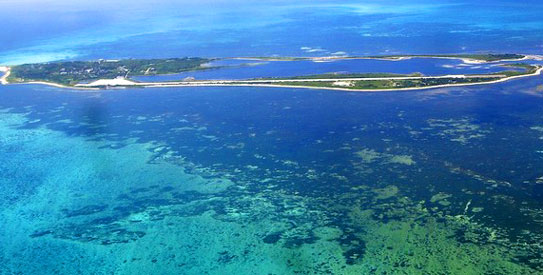
OSLO: Ocean scientists urged governments on Sunday to invest billions of dollars by 2015 in a new system to monitor the seas and give alerts of everything from tsunamis to acidification linked to climate change.
They said better oversight would have huge economic benefits, helping to understand the impact of over-fishing or shifts in monsoons that can bring extreme weather such as the 2010 floods in Pakistan.
A scientific alliance, Oceans United, would present the plea to governments meeting in Beijing on Nov. 3-5 for talks about a goal set at a 2002 UN Earth Summit of setting up a new system to monitor the health of the planet.
“Most ocean experts believe the future ocean will be saltier, hotter, more acidic and less diverse,” said Jesse Ausubel, a founder of the Partnership for Observation of the Global Oceans (POGO), which leads the alliance and represents 38 major oceanographic institutions from 21 nations.
“It is past time to get serious about measuring what's happening to the seas around us,” Ausubel said in a statement.
POGO said global ocean monitoring would cost $10 billion to $15 billion to set up, with $5 billion in annual operating costs.
Currently, one estimate is that between $1 and $3 billion are spent on monitoring the seas, said Tony Knap, director of the Bermuda Institute of Ocean Sciences and a leader of POGO.
Knap said new cash sounded a lot at a time of austerity cuts by many governments, but could help avert bigger losses.
Japan Tsunami
Off Japan, officials estimate an existing $100 million system of subsea cables to monitor earthquakes and tsunamis, linked to an early warning system, will avert 7,500-10,000 of a projected 25,000 fatalities in the event of a huge subsea earthquake.
“It sounds a lot to install $100 million of cables but in terms of prevention of loss of life it begins to look trivial,”Knap said.
New cash would help expand many existing projects, such as satellite monitoring of ocean temperatures, tags on dolphins, salmon or whales, or tsunami warning systems off some nations.
Ausubel told Reuters: “The Greeks 2,500 years ago realised that building lighthouses would have great benefits for mariners. Over the centuries, governments have invested in buoys and aids for navigation.
“This is the 21st century version of that,” said Ausubel, who is also a vice-president of the Alfred P. Sloan Foundation in the United States.
Among worrying signs, surface waters in the oceans have become 30 percent more acidic since 1800, a shift widely blamed on increasing concentrations of carbon dioxide in the atmosphere from burning of fossil fuels.
That could make it harder for animals such as lobsters, crabs, shellfish, corals or plankton to build protective shells, and would have knock-on effects on other marine life.
Scientists said it was hard to predict the effects of acidification. Colder water retains more carbon dioxide – making the Arctic most at risk. Warmer water in the tropics could mean less retention of carbon dioxide. – Reuters