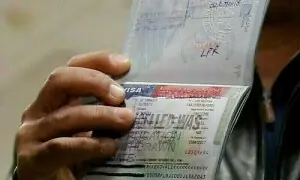
TOKYO A Japanese human rights lawyer on Thursday labelled a government-backed foreign trainee programme as a “form of human trafficking”, saying dozens had died from apparent overwork.
Japan has invited tens of thousands of foreigners for industrial training programmes as low-wage apprentices, mostly from China, Indonesia and the Philippines, since the 1990s, officially so they can learn new skills.
“There is a huge difference between the purpose of this system and the reality,” said Lila Abiko of the Lawyers' Network for Trainees in Japan.
“The purpose they say is the international contribution through transferring technologies through the person from a developing country. But actually this system functions to receive cheap unskilled labourers and exploit them.” The Japanese government, which allows little immigration of unskilled workers, started the trainees' programme in 1993, after the world's second-largest economy dived into a serious downturn.
Amid rising concern over abuses, the lawyer said that a record 35 workers from Asia had died in Japan in the year to March 2009 alone.
The Japan International Training Cooperation Organization (JITCO), which oversees the programmes, had said last year that of these 16 had died of heart and brain ailments, five in workplace accidents and one had committed suicide.
A JITCO spokesman was not immediately available for comment. The following year, 27 deaths were reported, including nine from heart and brain ailments and three suicides, Abiko said.
This month a Japanese labour office for the first time recognised that a Chinese intern employed under the programme had become the victim of what in Japan is called “karoshi” or “death through overwork.” Jiang Xiao Dong, 31, from Jiangsu province died after a heart attack in June 2008 after working more than 100 hours overtime the month before at a metal processing firm northeast of Tokyo.
Abiko, who represents Jiang's family, said one of his time cards showed he had worked 350 hours in November 2007 alone.
She said many of the interns had paid high deposits in their home countries, often equivalent to several years' income, to unauthorised local brokers who helped them register for the programme and travel to Japan.
“I think this is one form of human trafficking, especially when they are seized by the throat because of the deposit,” she said.
One Chinese trainee, Li Quing Zhi, 34, said he came in 2007 to learn Japanese cooking but instead did manual work at a manufacturing workshop at minimum wage, working 150 hours of unpaid overtime a month.
After repeated complaints he was fired in March, leaving him stranded.
“I cannot go back to China without getting the payment that I deserve,” said the man, who said his wife and two children are waiting for him.
Jorge Bustamante, UN special rapporteur on the human rights of migrants, issued a warning in April about the trainee programmes.—AFP