0
0

IN a world where, in the eyes of many, making money suffices as a raison d`etre, it is quite conceivable that, in different circumstances, the sort of activities in the Gulf of Aden that have lately aroused international angst would have been viewed as perfectly commendable.
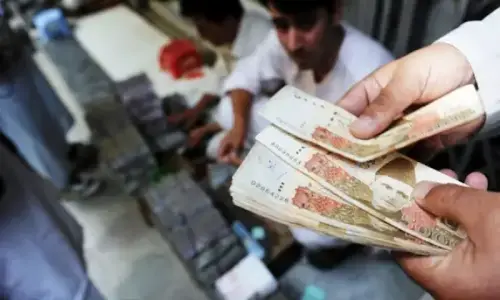
The modus operandi of the Somalis behind their country`s only growth industry is fairly simple they patrol the waters in so-called mother ships, pick a target, despatch speedboats to capture it, then negotiate a ransom with the hijacked vessel`s owners. Once the money is received — they prefer cash, often delivered by airdrop — they allow the vessel to resume its journey. Violence is threatened in the event of non-compliance, but there have thus far been no cases of physical harm to crews. A proportion of the loot goes to the sponsor of the mission, while the rest is divided up among those who participated in the venture.
Rather enterprising, one would have thought. And reasonably civilised the pirates are not cut-throat, they`re businessmen. Of course, their aversion to bloodshed may well be based chiefly on practical considerations, given that the impetus for military action against them would increase sharply in the event of crew members coming to any harm. In the past week or so, the pirates may also have realised that it`s safer, from their own point of view, to not get too ambitious.
The hijacking earlier this month of the Sirius Star, a Saudi-owned tanker carrying crude oil worth $100m — roughly a quarter of the kingdom`s daily output — inevitably attracted a great deal more attention than the capture of smaller vessels, and persuaded some shipping lines to suspend operations along this particular route. It also stirred the Islamist militia Shabaab, whose control over the country has been growing in inverse proportion to the diminishing presence of the federal transitional government in Mogadishu.
It is perfectly possible that Shabaab`s concern over the Sirius Star is prompted by connections with Saudi Arabia, although it has also been suggested that the militia`s primary motivation is to obtain a slice of the profits. The captors are reported to have demanded by the end of this month a ransom of $25m, a figure that exceeds by several multiples the amount of cash they normally seek.
One reason why they have frequently been getting away with this kind of extortion is because the cost of mounting rescue operations would be much higher; what`s more, the military option would risk lives, and its international legality would be dubious. So far, only France has tried, with some success, to use force in hostage situations, while an Indian naval vessel last week sank what was purportedly a Somali pirate mother ship.
The Sirius Star affair sparked serious concern partly because the tanker was accosted not in the usual danger zone, but 450 nautical miles off the coast of Kenya, in the Indian Ocean, signifying that the pirates` area of operations had expanded considerably. Inevitably, some of their income is poured into improved vessels and armaments.
Until a decade or so ago, piracy was generally considered a threat mainly in Southeast Asia`s Malacca Straits. The menace in that part of the world has sharply been reduced as the result of coordinated operations by Malaysia, Thailand and Indonesia. Were Somalia to contemplate a comparable effort, it could probably count on the assistance of neighbours such as Kenya. But in the given circumstances, the question of such an effort barely arises. The nation has had no coherent government since 1991, and it is a wonder it is still intact, albeit barely.
Shabaab is an offshoot of the Union of Islamic Courts that briefly brought a semblance of stability to Mogadishu two years ago. It was by no means an ideal solution to the anarchy that preceded it, but the Islamists who wielded power were not completely off the wall. They did not, however, have a clear idea of what to do with that power. The United States, meanwhile, was wary of Al Qaeda connections, and supported an invasion by Ethiopia to overthrow the Islamic Courts and establish a puppet regime. The latter`s head, President Abdullahi Yusuf, has lately exhibited few qualms about admitting that his government`s jurisdiction is rapidly decreasing.
The chief beneficiary is Shabaab, which unfortunately appears to epitomise the worst aspects of Islamist zeal. There have, for instance, not only been death threats against human rights activists — ordering them to desist from their activities — but it appears some have actually been carried out. Inarguably the most repugnant outrage thus far has been the death by stoning of a 13-year-old rape victim. Who can say whether it is an aberration or an awful sign of what lies ahead for an exceptionally ill-starred nation?
A limited number of Ethiopian and African Union troops is all that stands between Shabaab and the centre of power. There are also rival Islamist groups contending for control of Somalia. Ultimately, there is precious little that Ethiopia can do about it. The international community, for what it`s worth, is neither inclined to intervene nor capable of guaranteeing a more salutary outcome. According to one Nairobi-based diplomat, western governments have tended to view Somalia as “too difficult to solve and not important enough to matter”. His solution? “We need to accept a few years of harsh Islamic rule and work with authority that way.”
That may indeed be preferable to ham-fisted intervention. It`s worth remembering, though, that the Islamist forces, too, are riven by bitter rivalries, and Shabaab`s ascendancy, were it to be established, wouldn`t go unchallenged. Besides, it`s unlikely whether regime change in Mogadishu would go a long way towards curbing piracy in the Gulf of Aden.
One of the reasons behind the trend was the tendency of foreign fishing vessels, operating in Somali waters with or without official permission, to treat local fishermen as competitors who must be chased away. This obviously did not go down well with coastal residents, who, with plenty of justification, considered it their birthright to exploit coastal waters. They started hijacking foreign fishing boats, and simply went on to bigger things.
This is the sort of entrepreneurial zeal that, if properly harnessed, could potentially go a long way towards ending the dysfunction that distinguishes Somalia from its neighbours. The greater likelihood, sadly, is that self-funded pirates will continue to harass traffic that flows through the Suez Canal, while Mogadishu will continue to bear witness to ruptures and eruptions. The worst of all possible worlds, in other words, at least for the time being.
The writer is a journalist based in Sydney.