They shared the characteristic of being underprivileged, deprived and oppressed as were the masses in pre-revolutionary France who were dominated by the clergy and the nobility.
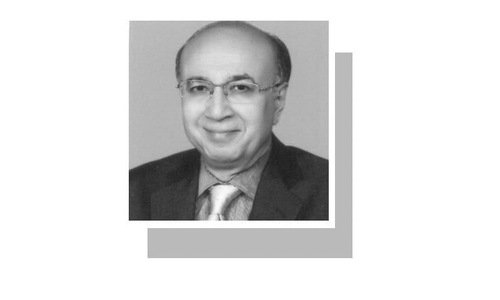
Prof Naqvi was deeply involved in the politics of the Left in Pakistan until 1990. He has not attempted to trace the history of Asia, Africa and Latin America in the ideological context in the book under review.
That would be an impossible task to accomplish in 84 pages. But through his analysis of issues of immediate concern to developing countries, the reader gets a fairly good idea of the emerging trend.
The countries that managed to shed off the yoke of colonialism were not concerned so much with the struggle for supremacy between labour and capital as they were focused on escaping the domination of the two power blocs and promoting international peace and nuclear disarmament. Economic development was a key goal.
These countries had to negotiate their way through the shoals of imperialism which gave birth to the multinationals that came to control economic relations and spearheaded what is today described as globalisation.
As the voice of the Third World, the Non-Aligned Movement became a proponent of an equitable balance between the rights and obligations of the investors, extra-territorial application of domestic laws, conditionalities of human rights and environmental preservation.
Although the author appears to place great confidence in the United Nations — though the world body has lost whatever influence it possessed — he does not explain how the UN will bring about the changes needed to end inequity.
Prof Naqvi admits that a threat to peace will remain so long as 'globalisation is not made sustainable by enlarging the share of the poor in the pie, a highly complex exercise in which many frictitious claims will have to be evened out to make the situation less combustible.'
How will this be achieved? The author believes if all the stakeholders were to realise the importance of this goal, it can be achieved. But he goes on to point out that the 'national pie' is characterised by the lack of rule of law, corruption and massive inequality.
The fact is that one feature of globalisation is that the class divide in every Third World state now transcends its boundaries. Within every oppressed state there are allies of the imperialists who frustrate the struggle of the oppressed.
This book should provide food for thought to its readers, though the touch of the editor's blue pencil would have enhanced its quality immensely.
The Third Estate in a
Changing World
(THIRD WORLD POLITICS)
By Syed Jamal Uddin Naqvi
Al-Hasan Academy, Karachi
84pp. Rs100