KARACHI, Feb 7: Sindh government has taken an initiative for the revival of Karachi Circular Railway which was shelved in September last year following the federal government’s refusal to grant Rs20 billion for the project.
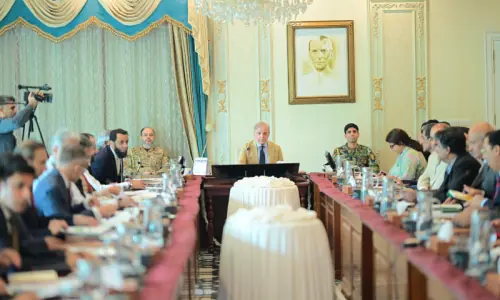
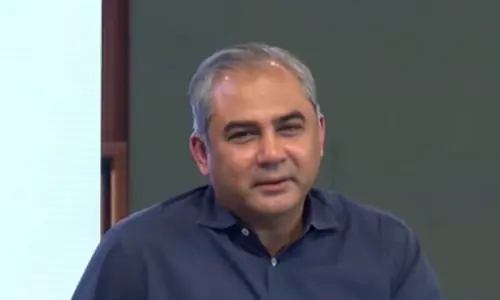
“We want KCR to be revived in the extreme interests of the people by removing the flaws,” Minister for Transport Adil Siddiqui told a press conference at the committee room of Sindh Assembly on Friday.
About an alternative funding, the minister referred the question to the provincial Transport Secretary, Raja Mohammad Abbas, who pointed out that a provincial government delegation, headed by Mr Siddiqui, would be leaving for China on Feb 9 to study railway system in that country. He revealed that a China-based company, Chinese Mechanical Company (CMC), had offered the Sindh government to conduct a separate study on the KCR and prepare its feasibility at a cost of US$3 million.
Raja Abbas the CMC would conduct the study independently for which all the required assistance would be provided by the transport ministry.
“It has been mutually decided that the cost of the study will be incurred by the CMC and after its completion, it will be the Sindh government’s prerogative to allow the company to build and operate the KCR or invite bids from other interested foreign firms.”
Raja Abbas recalled that studies were conducted in the past on Karachi Mass Transit and a tender submitted by a consortium of three foreign companies was approved. However, he said, the plan did not materialized as its date of financial close could not be extended for whatever reasons. No study exclusively for the KCR has ever been conducted, he added.
About the study by a local firm, Engineering Consultants International Limited (ECIL), the secretary maintained that it had not been completed yet.
According to sources, the delegation is likely to meet Chinese investors and try to convince them that there was a great potential in KCR and, on the whole, the transport sector. The investors may also be offered the KCR project on ‘build, operate and transfer’ (BOT) basis.
While taking the decision on shelving the KCR, the federal government had advised provincial and city governments to explore ways and means to improve transport management system, they said.
The provincial government has already spent more than Rs3 billion on the construction of flyovers on various level-crossings and another Rs322.5 million on many studies for a feasible mass transit project. However, there has been no visible development pointing to the physical implementation of any of the studies or proposals.
The KCR, which made its debut sometime in 1969 with 14 up and as many down trains, was extremely beneficial to, and accordingly fostered by, the middle and lower middle classes, especially workers of low or limited income group.
With the passage of time and expansion of the city, transporters clout made its way into the relevant authority and in 1975, its first victim was the tramway service operated by Muhammad Ali Tramway Company. Winding up of tramway service deprived the citizens of the cheapest means of transport operating between Garden and Cantt Station via M. A. Jinnah Road, Mereweather Tower, Keamari, Soldier Bazar and Saddar.
Eventually, the KCR was suspended on Dec 15, 1999. In 1980, the KCR’s single journey fare was Rs0.25 which gradually increased to Rs2 at the time of its closure.