8
8

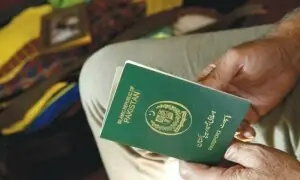
WASHINGTON: More than 700,000 refugees returned to Afghanistan in 2016, most of them from Pakistan, says an IMF report released on Friday.
The Washington-based International Monetary Fund said that the repatriation, which started as a trickle, has now changed into a flood. “This is seriously aggravating the government’s capacity to absorb refugees in an already difficult environment of high unemployment and internally displaced people after decades of conflict,” the report warned.
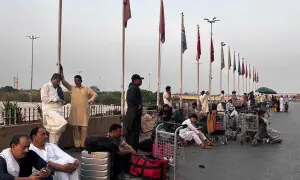
The refugees were “primarily returning from Pakistan, often not voluntarily,” it added. There were also returnees from Iran and to a lesser extent from Europe. Statistics released by a UN refugee agency, and quoted in the report, show that Afghans are the second largest refugee group after Syrians and most of them live in Pakistan.
The IMF urged the international community to “play a vital role” in providing financial and humanitarian support to avert a crisis and limit the damage to Afghanistan’s already challenging social and security conditions, and development prospects.
The report quotes analysts as projecting that up to 2.5 million refugees will follow over the next 18 months, which will add nearly 10 per cent to Afghanistan’s population. To put this in perspective, this would be akin to 50m migrants entering the European Union over a two-year period.
The report says that many of these refugees are returning to a country facing conflict, insecurity and widespread poverty.
“Given the difficult economic climate, prospects for returnees are generally poor,” it warns.
Most refugees are labourers and workers in the informal economy, with limited savings, or small business owners who are forced to liquidate their assets at fire sale prices. “A typical returning refugee has a high risk of falling into poverty,” the report warns.
The document notes that the prospects for absorbing returning refugees are further complicated by the existence of more than one million internally displaced people, the number of which significantly increased in 2016 as the insurgency intensified. The IMF warns that these problems will severely stretch the country’s capacity to cope.
Published in Dawn January 28th, 2017