It took 8,500 men working two shifts every day for six months — and three shifts for two months — to finish, ahead of schedule, the Adani Group's giant solar power plant in southern India.
The vast, 10 sq km project in Ramanathapuram, in the southern state of Tamil Nadu, is the world's largest solar power station in a single location, according to the company.
It has the capacity to power 150,000 homes — and it is one sign of how serious India is becoming about meeting its renewable energy targets.
Considering the delays that commonly bog down infrastructure projects in India, the speed at which the 648 megawatt project was completed demonstrates the country's commitment to renewable energy, said an analyst.
“The government is very clear about its solar plan, and large installations are key to this plan,” said Aruna Kumarankandath of the Centre for Science and Environment in Delhi.
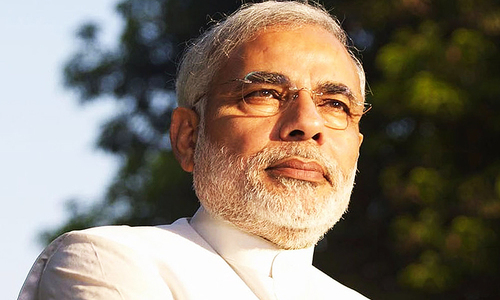
Indian Prime Minister Narendra Modi “is a real evangelist”, and has prioritised solar to meet the renewable target, she said.
As a signatory to the Paris Agreement on climate change, India is committed to ensuring that at least 40 per cent of its electricity will be generated from non-fossil-fuel sources by 2030.
While coal still provides the lion's share of India's energy, officials forecast the country will meet its Paris Agreement renewable energy commitments three years early — and exceed them by nearly half.
A 10-year blueprint released last month predicts that 57pc of total electricity capacity will come from non-fossil sources by 2027.
Solar energy is a particular focus. It makes up 16pc of renewable capacity now, but will contribute 100 gigawatts of the renewable energy capacity target of 175 GW by 2022.
Of that 100 GW target, 60pc will come from large solar installations. The government is planning 33 solar parks in 21 states, with a capacity of at least 500 megawatts each.
Getting cheaper
India's ambitious targets come at a time when renewable energy is at a turning point in the country, as generating electricity from renewable energy costs nearly the same as from conventional sources.
The urgency also aims to fill a gap: India is among the world's fastest growing economies, yet one-third of its households have no access to grid power.
The renewable energy goal will help ensure “uninterrupted supply of quality power to existing consumers and provide electricity access to all unconnected consumers by 2019”, according to the blueprint.
The Adani plant, built at a cost of 45.5 billion rupees ($661 million), reflects the government's ambitions. It comprises 2.5 million solar panel modules, 576 inverters and 6,000 km of cables, the company said.
The government grants some subsidies for solar and has raised the investment target for solar energy in the country to $100 billion, with Japan's Softbank and Taiwan's Foxconn among others committing to the sector.
But there are hurdles, with land availability for solar parks a chief concern. Conflicts related to land have stalled industrial and development projects in India, putting billions of dollars of investment at risk, according to a recent report.
“Land is definitely a concern, and there's also the issue of transmission,” said Kumarankandath.
“It's all very well to produce all this energy, but do we have transmission lines capable of taking it up? We're also going to need large quantities of water to clean the panels.”
Some states are passing new land laws to make acquisitions easier, while the government is also exploring innovative places to install solar panels, including across the tops of irrigation canals.
Meanwhile, the Adani group, India's biggest solar power producer and also its top coal-fired generator, may be unseated before long by China, which is building what it claims will be the biggest solar farm on earth: an 850 MW plant on 27 sq km of land.