NEW DELHI: China defended on Wednesday the China-Pakistan Economic Corridor (CPEC) as a project meant for regional peace and development after Indian prime minister hinted that it violated India’s territorial sovereignty, even though he did not name it in his speech.
Speaking at the inaugural session of the Raisina Dialogue on Tuesday, Narendra Modi had said: “Respect for sovereignty is important for regional connectivity to improve.”
He said that it was not unusual for two large neighbouring powers (like India and China) to have some differences. “In the management of our relationship, and for peace and progress in the region, both our countries need to show sensitivity and respect for each other’s core concerns and interests,” he added.
When asked to respond to Mr Modi’s remarks at a media briefing, Hua Chunying, the spokesperson for China’s foreign ministry, said: “Regarding CPEC, this is a project that is devised for long-term development and cooperation in various fields... It is for regional peace and development.”
The India Today quoted her as saying that the project “targets no third country and it will not affect China’s position on Kashmir”.
The unambiguous Chinese foreign ministry statement, however, did not stop Indian Foreign Secretary S. Jaishankar from bringing up the same subject on the second day of the Raisina Dialogue and claiming that CPEC passed through its territory.
“CPEC passes through a territory that we see as our territory. Surely people will understand what Indian reaction is. There needs to be some reflection and I am sorry to say that we have not seen signs of that,” he said.
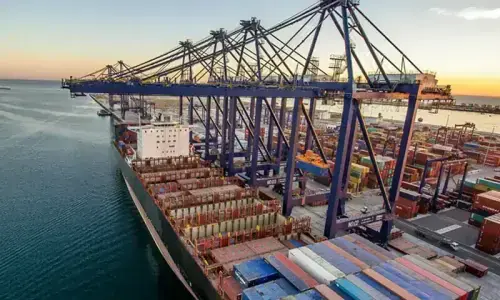
China and Pakistan have fast-tracked the construction work of the CPEC, a large part of which passes through Azad Kashmir, to which India lays claim in its ongoing dispute with Pakistan. Once completed CPEC will provide all-weather energy route for China from the Gulf. Reports said that India’s concerns had increased in recent weeks with reports of China-Pakistan naval cooperation in Gwadar port of Balochistan, which would serve as the entry point to CPEC.
Mr Jaishankar said that China’s rise as a major “dynamic” factor in the Asian affairs served to remind that differences with China had not gone away. “With China, the overall broadening of ties, especially in business and people-to-people contacts, has been overshadowed by differences on certain political issues,” he said.
“But it is important for the two countries not to lose sight of the strategic nature of their engagement or falter in their conviction that their rise can be mutually supportive.”
Reports said that the foreign secretary’s comments about CPEC and “political issues” were significant as both India and China had dealt with the differences over the last several months. India is unhappy over China’s stance at the Nuclear Suppliers Group where its membership bid was scuttled last year.
China’s territorial assertion over Asia received a jolt in July 2016 when the Permanent Court of Arbitration gave an adverse verdict on the South China Sea issue.
Mr Jaishankar was quoted as saying that India’s position on South China Sea was in sync with the international community’s position.
Published in Dawn, January 19th, 2017