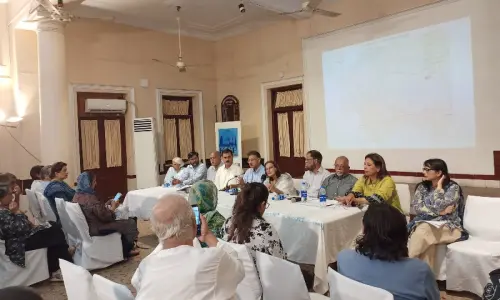
KARACHI: Highlighting how mercury exposure can seriously affect humans and wildlife, experts at a workshop held on Thursday underlined the need for creating awareness on regulating the use of the highly toxic chemical element and developing strategies for safe management and disposal of mercury-bearing waste.
The workshop on Minamata Convention on Mercury, to which Pakistan is a signatory, was organised by the Sindh Environmental Protection Agency (Sepa) in collaboration with the department of environment, climate change and coastal development, the United Nations Environment Programme, the ministry of climate change and the Global Environment Facility.
The programme was part of a project titled Development of Minamata Initial Assessment in Pakistan being implemented by the climate change ministry with the support of other organisations.
The project aims at strengthening baselines on mercury management, developing national mercury inventories and national mercury management plans and regional approach.
In their brief remarks, secretary environment, climate change and costal development, Zameer Ahmed Khan and national project coordinator Zaigham Abbas said that the event was an effort to sensitize all stakeholders at the provincial level to the consequences of mercury usage in different products.
They emphasised the need for having a coordinated mechanism at the provincial and national level to implement the Minamata Convention, a global treaty signed in 2013 to protect human health and environment from the adverse effects of mercury.
A video on the Minamata incident was also screened, detailing the mercury poisoning disaster that occurred in Japan 50 years ago when Minamata Bay got contaminated with mercury following disposal of mercury-bearing waste into the bay on a massive scale by a chemical plant.
The disaster took 900 lives and left 2,265 people badly affected who were certified as having directly suffered from mercury poisoning — now known as Minamata disease. The local wildlife was also seriously affected.
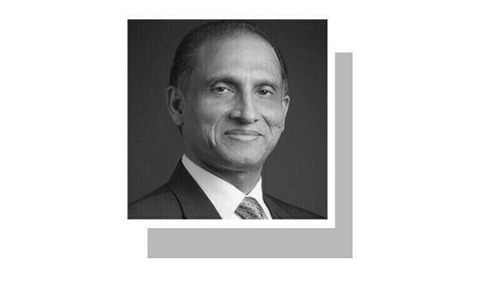
President of the International Society of Doctors for Environment, Dr Mahmood A. Khwaja, gave a detailed presentation on mercury exposure from various mercury-containing products including dental amalgams (usually a mixture of mercury, silver, tin and copper) and skin-whitening products and suggested the use of mercury-free dental amalgams and banning of harmful skin-whitening products.
He pointed out that air at dental teaching institutions and private dental clinics in selected cities of Pakistan had also been found to be contaminated with mercury.
“In some cases the mercury levels were very high especially at public-sector facilities. There is an urgent need to create awareness on this issue at every level,” he said, adding that mercury harmed brain, kidneys, and lungs and unborn and young children were particularly at risk
Dr Zafar Fatimi from the Aga Khan University Hospital said 50 to 75pc mercury released into environment was the result of human activities, for instance combustion of fossil fuel, industrial waste discharge, incineration and dental amalgams.
A systematic risk assessment of exposure to mercury was immediately needed, he said.
Dr Hussain Rizvi of the Space and Upper Atmosphere Research Commission and director general of Sepa, Naeem Ahmed Mughal, also spoke.
Published in Dawn, December 30th, 2016