LAHORE: Despite perceived failure of genetically modified (GM) cotton seed experience in Pakistan and official reports confirming the presence of advanced varieties of bacillus thuringiensis (Bt) cotton seed in use, the Punjab government is reportedly planning to acquire two more advanced varieties from a multinational GM technology provider.
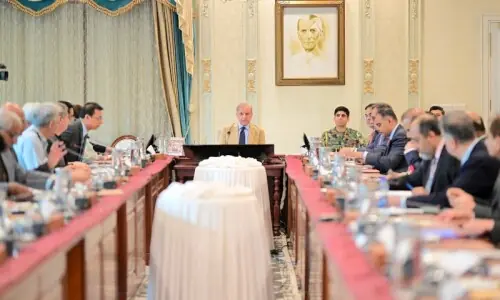
The agriculture department held a meeting this week to discuss an update on the negotiations with the GM technology provider and muster support of stakeholders in favour of imported varieties of Bt gene. The meeting — attended by officials, researchers, academia, growers, textile producers and seed companies — was a follow-up of a previous meeting held last month to discuss acquisition of advance gene technologies and related issues.
Sources said the agriculture department was planning to buy Bollgard II and Roundup Ready Flex (RRF) genes from Monsanto under the Kissan Package 2016-17, apparently for better seed quality resisting pests and weed controls amid serious reservations by agriculture scientists and cotton growers.
They said both genes were already in use in cotton seed as they were tested positive in the government laboratory reports conducted by the Agriculture Biotechnology Research Institute (ABRI), Faisalabad, in 2012.
The ABRI confirmed the presence of both traits when some seed companies and government research institutes sent their Bt cotton seed samples for the National Coordinated Varietal Trials (NCVT) nationwide, sources said quoting a report.
According to a government report issued in March 2014 and published in the International Cotton Advisory Committee (ICAC) of the United States, Pakistan has adopted transgenic cotton (Bollguard II) over the area of about 86pc.
As per minutes of the first meeting available with Dawn, Punjab Agricultural Research Board (PARB) CEO Noorul Islam gave an overview of the negotiations agreement with Monsanto to harness its cotton GM technology (bollworm and weed control) and efforts of the Punjab government to transform local seed industry into a vibrant one.
It was decided an agreement with Monsanto would be made to get the required cotton gene technology on a long-term basis and acquire bollguard II–RRF gene technology, advance gene technology such as bollguard III and IV and lygus control gene technology for sucking pests. The agreement, if signed, will also include long-term partnership to transform local seed industry with reform project to strengthening six private seed companies and the Punjab Seed Corporation.
The chair was of the view that Monsanto’s double gene and weed control technology has been extensively tested for biosafety in other parts of the world. Therefore, it should be given exempt status by the Ministry of Climate Change. Monsanto should share the biosafety data used in other countries for biosafety clearance and file the case with the ministry.
“We must provide advance lines which have good combination of heat, cotton leaf curl virus (CLCV) and drought tolerance along with good fibre traits,” the minutes quoted the scientists as having agreed.
Punjab Agriculture Department’s Director General Research Dr Abid Mehmood, who was one of the participants of the meeting, said nothing is final to get latest gene technology as stakeholders of the meeting only deliberated upon whether imported GM technology should be welcomed or indigenous varieties should be introduced for improving cotton production.
Published in Dawn, December 15th, 2016