1
1

Several medium-sized Pakistani businessmen have invested small sums of money in what they call ‘collaborative manufacturing’ in India, China, Indonesia and elsewhere in East Asia. This is to produce ‘quality’ tyres of different sizes and specifications for the ‘replacement market’ at home.
“Starting a new tyre manufacturing business in Pakistan has become very capital intensive over the years.
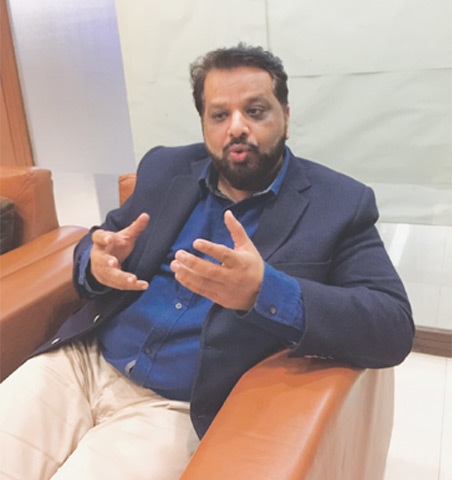
“The costs of making tyres (for cars, buses, tractors, dumpers, OTR (off-the-road) vehicles, industry, etc) locally has gone up sharply because we do not produce raw materials — rubber, chemicals, bead wire, special fabric, etc —, or have a vending industry to support the (end tyre) manufacturers,” argued Awais Piracha, whose family has been involved in the tyre trade for the last three generations, and was among the first few to enter into collaborative manufacturing with manufacturers in China, India and Indonesia.
Awais Piracha claimed that collaborative manufacturing afforded him and others an opportunity to keep imports cost-effective in the face of strict price competition from smuggling
He claimed that collaborative manufacturing afforded him and others an opportunity to keep imports cost-effective in the face of strict price competition from smuggling.
“By investing small sums in moulds and other equipment we can get quality tyres of different sizes made according to our market demand and conditions. The manufacturers who we collaborate with are small to medium sized and are not allowed to sell tyres produced using our moulds and equipment except to us and in their home market.”
There is only one manufacturer in Pakistan producing tyres, General Tyre and Rubber Company, for passenger cars, tractors, trucks and buses. The company too produces a limited number of sizes, mainly for the OEMs (original equipment manufacturers) with a negligible presence in the growing replacement market dominated by imported and smuggled tyres.
The remaining seven domestic tyre makers only produce for two-wheelers and three-wheelers, with one also producing for tractors.
Mr Piracha insisted that the massive, uncontrolled influx of smuggled tyres through Pakistan’s porous borders with Iran and Afghanistan, to avoid a 50pc and 62pc irrational tax burden on tyre imports, is not only harming the only local manufacturer, but also preventing foreign investment in this industry.
“The quantity in which tyres are being smuggled into the country is also undermining legal imports and hurting the government’s revenues. You cannot expect any investor to put his money in this industry as long as smuggling is allowed to go unchecked,” he contended.
In response to a question, he claimed that smuggling and not legal import is an impediment to growth in domestic tyre production.
“I do not support reducing the tax burden on tyres imported for expensive luxury cars. But I do want the government to lessen the tax burden on imported tyres used by productive sectors like agriculture, industry and construction that account for maximum job creation in this country.”
According to an estimate, he said, the smuggled tyres are fulfilling almost 45pc of the domestic market requirements compared with 20pc met by legal imports and 35pc by domestic production.
“The sheer number of smuggled tyres of different sizes and specifications finding a place in the domestic replacement market shows the huge potential for attracting domestic and foreign investment in tyre manufacturing in the country.
“Moreover, modernisation of the economy, construction of new roads and highways and expected growth in international trade, once the China Pakistan Economic Corridor (CPEC) project is complete, offers enormous opportunities for investment in this industry in the near to medium term.”
But he cautioned: “Before that happens, the government needs to check smuggling for fair competition in the market and announce incentives for new investments — local or foreign or joint ventures — and bring down the cost of doing business.
“Once we have developed a competitive domestic tyre industry that meets market demand and requirement, imports will automatically peter out as has been the case with the motorcycle market. The entire demand for this segment is now met by local producers.”
Compared with Pakistan, India has, in recent years attracted massive investment from European manufacturers in the tyre industry with its own companies expanding production and sales across the globe because of incentives given by their government.
“My experience of working with Indian and Chinese manufacturers tells me that support from the government to medium-sized investors is crucial for the development of the domestic tyre industry.”
At the same time, he added, existing manufacturers must create a vending base for the industry.
“When you insist on producing everything under one roof and don’t encourage the vending industry, you create rivals for yourself. By improving the vending base you can improve your quality and cut costs, especially when you are dependent on imported raw materials.”
Published in Dawn, Business & Finance weekly, December 12th, 2016