KARACHI: An official report authored by the Sindh home ministry has identified 62 banned religious or sectarian organisations active in the province, including the re-emergence of 35 such groups, it emerged on Wednesday.
“We have identified 62 banned religious / sectarian organisations and have requested the Ministry of Interior (MoI) for more information [about them],” said the report that was shared with the apex committee in a recent meeting.
It said the investigation revealed that 35 groups, which had gone into hibernation after being slapped with the ban by the federal government, had re-emerged.
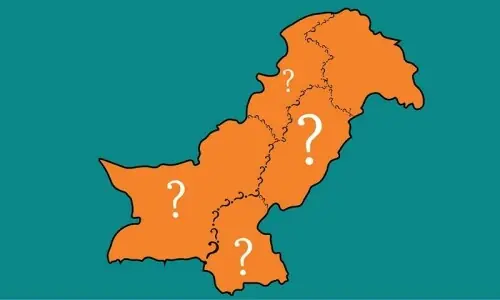
Most of those groups [12], said the report, re-emerged in Benazirabad, the native district of the co-chairman of the ruling Pakistan Peoples Party. Besides, six of them resurfaced in Sukkur, five in Mirpurkhas, three each in Hyderabad and Korangi, and two each in Karachi West, Sujawal and Tando Mohammad Khan.
Officials said the government had included 602 persons in the IVth Schedule of the banned organisations in Sindh.
According to anti-terrorism law, the federal government may list a person “as a proscribed person in the Fourth Schedule on an ex-parte basis”, if there are reasonable grounds to believe that, such person is concerned in terrorism [category A]; an activist, office-bearer or an associate of an organisation kept under observation or banned [category B]; and in any way concerned or suspected to be concerned with such organisation or affiliated with any group or organisation suspected to be involved in terrorism or sectarianism or acting on behalf of, or at the direction of, any person or organisation proscribed under the ATC Act [category C].
Most of such individuals [221] belonged to the banned Sipah-i-Sahaba Pakistan (SSP), of whom 154 have been put under category A. The remaining persons belonging to other organisations are as under:
Khudam-ul-Islam [four], Harkat-ul-Mujahideen [19], Mohajir Qaumi Movement-Haqiqi [three], Pakistan Sunni Tehrik [10], Sipah-i-Mohammad Pakistan [39], Lashkar-i-Jhangvi [41], Lashkar-i-Tayyba [12], Jaish-i-Mohammad [32], Jundullah [five], Jamaat-ud-Dawa [10], Tehreek-i-Taliban Pakistan [27], Jeay Sindh Muttahida Mahaz[three], Tehreek-i-Jafria Pakistan [20], Lyari gangs [one], Majlis Wahdat-ul-Muslameen [four], Hizb-ul-Tahrir [one], Ahle Sunnat Wal Jamaat [eight], Al Qaida [three], persons categorised as jihadis [18], and ‘suspicious persons’ of all sects [120].
Some 444 of them have been put in category A, 115 in category B, and 43 in category C.
Most of such persons [395] reside in Karachi, followed by 65 in Sukkur, 55 in Hyderabad, 32 in Benazirabad, 46 in Larkana and nine in Mirpurkhas division.
About the action so far taken against the persons on the IVth Schedule, the report said out of total 602 such individuals, 28 accused had been arrested who were booked in 48 different cases. Some 29 of such cases have been registered in Karachi division alone. Eight cases were registered in Hyderabad, six in Sukkur, four in Benazirabad, and one in Mirpurkhas. No case has been registered in Larkana.
Recently, the chief minister had showed his dismay over the reports of re-emergence of banned groups with new names in Sindh and asked the relevant authorities to stop such trend ‘with iron hands’.
Officials said Chief Minister Murad Ali Shah had asked the home ministry not to allow such groups to continue their activities in the garb of new titles. They said the government on his directive had adopted the policy that banning of such organisations was not enough. In addition to the ban, they added, the authorities were putting office-bearers and members of those groups in the IVth Schedule.
Published in Dawn December 8th, 2016