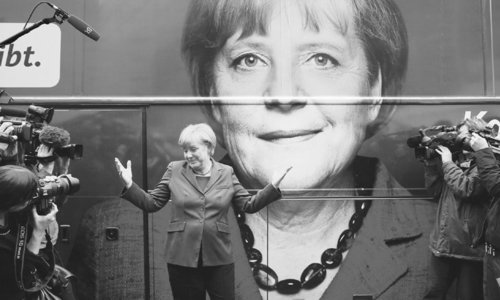
Chancellor Angela Merkel on Tuesday in a speech looking ahead to Germany's 2017 general election rallied for a ban on the burqa in public places.
Merkel, playing to the wing of her conservative party that has been deeply unsettled by last year's record influx of asylum seekers ─ most of them Muslims fleeing war zones ─ underlined her support for a proposal in August by her interior minister, Thomas de Maiziere, to outlaw the burqa.
"The full veil must be banned wherever it is legally possible," she said.
Merkel, however, also attacked the rise of right-wing populists in Germany, hitting out at opponents of her liberal refugee policy staking a claim to define German national identity.
She told the annual congress of her Christian Democratic Union that it was legitimate to expect integration from newcomers whilst underlining her party's bid to ban the full face veil.
"We all get to determine who 'the people' are ─ not just a few, no matter how loud they are," Merkel said.
Without mentioning the upstart Alternative for Germany (AfD) party by name, Merkel said Germany must remain "sceptical about easy answers".
"The world is not black and white," she said. "Rarely is it the easy answers that bring progress to our country."
On German Unity Day in early October, Merkel faced noisy protests when she arrived at celebrations in Dresden birthplace of the anti-immigration Pegida movement.
The group has sought to co-opt the "We are the people" rallying cry used by East Germans in the peaceful revolution that brought down the Berlin Wall in 1989.
The German leader, in power since 2005, has been under pressure at home over her refugee policy that saw an influx of nearly 900,000 migrants last year.
Polls show nevertheless that her CDU is the clear frontrunner in the general election, expected in September 2017.
The AfD harnessed a wave of anger over the refugee arrivals to make strong gains in a string of regional elections this year. It is currently polling at around 12 percent nationally.
Its success has mirrored the march of anti-migrant parties in France, Austria and the Netherlands as well as Republican maverick Donald Trump in the United States.