WASHINGTON: The United States has assured Pakistan that it does not want to declare it a state sponsor of terrorism and desires to work with Islamabad “as cooperatively as we can” to eliminate terrorist safe havens from the South Asian region.
At a Friday afternoon news briefing, US State Department spokesperson John Kirby also said that the United States had full confidence in Pakistan’s capability to protect its nuclear weapons and to prevent terrorists from accessing them.
“I have not seen anything specifically about the… bill and obviously we don’t,” said Mr Kirby when asked if the US government would support a congressional bill and an online petition that seek to label Pakistan a ‘terrorist state’.
“We’re confident that Pakistan has the security controls they need to have in place on their arsenal, and I’d let them speak to that more specifically. I wouldn’t get into that,” said the US official when asked if Washington believed Pakistan could prevent terrorists from accessing its nukes.
In response to a question about Pakistan’s seriousness in combating terrorism, Mr Kirby said terrorism was as much a threat to Pakistani citizens and their children as it was to Afghan and Indian citizens and Pakistan took this challenge very seriously.
“We don’t think for a minute – we don’t believe for a minute that they don’t take the challenges before them seriously or the lives and security of their children,” he said.
Delegation
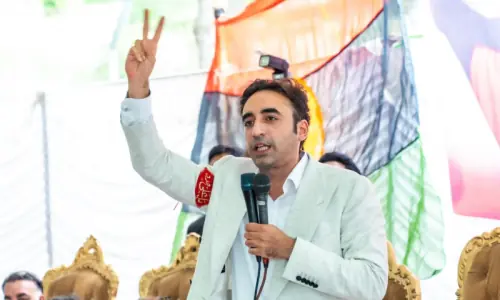
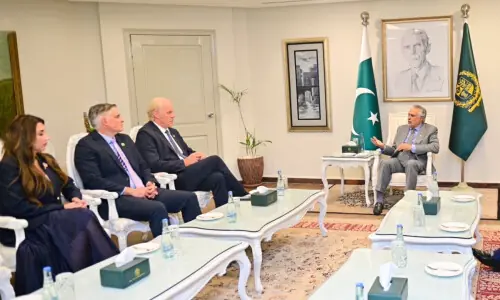
Senator Mushahid Hussain Sayed and Shezra Mansab Ali Kharal, MNA, currently in Washington to present Pakistan’s case on Kashmir, have been urging Americans to reduce their pressure on Pakistan. They repeated this message in more than a dozen meetings with US officials and lawmakers this week.
The envoys also reminded Americans that the situation in South Asia was changing rapidly and Pakistan had other options too, such as further strengthening its ties with China and improving relations with Russia.
Senator Mushahid Hussain’s statement at a Washington think tank that the United States was “no longer a superpower, it is a declining power,” raised many eyebrows, causing some to warn that Pakistan could spin out of US influence if pushed too hard.
While addressing another think tank, the senator said that the “road to peace in Kabul lies in Kashmir,” a warning noted keenly in Washington’s power circles and the media.
“You cannot compartmentalise peace, you can’t segregate a section... OK you can have peace in Kabul and let Kashmir burn. That is not going to happen,” he said.
This statement, combined with another in which he said that tensions with India could affect Islamabad’s capability to keep troops on the Afghan border, was interpreted as a warning that losing Pakistan’s support could complicate the Afghan situation.
Published in Dawn October 8th, 2016