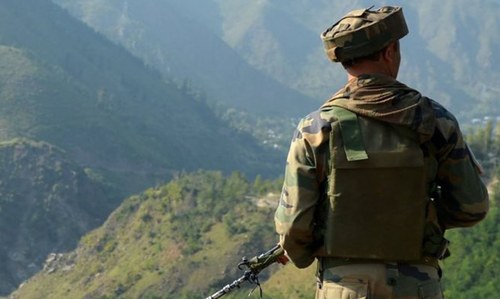
AS the initial frenzy subsides, it appears that at least the official Indian response to the Uri terrorist attack is taking on a more measured tone.
After Pakistan’s high commissioner to India was called in by the Indian foreign secretary, the Indian foreign affairs ministry issued a statement yesterday that ended with: “If the Government of Pakistan wishes to investigate these cross-border attacks, India is ready to provide fingerprints and DNA samples of terrorists killed in the Uri and Poonch incidents. We now expect a response from the Government of Pakistan.”
Given that the ISPR has already called for “actionable intelligence” from India in after the Uri attack, the offer ought to be taken up.
It is in this country’s interests to thoroughly investigate any claims of incidents of terrorism allegedly traced back to Pakistani soil, be it Uri, Pathankot or Mumbai.
The obvious concern is that investigations are piling up without any successful conclusions; each side blames the other for the impasse.
Curiously, while the official responses by India and Pakistan have been relatively measured and purposeful, the media’s role, especially in India, is increasingly that of unhinged warmongering.
Even before an attack ends, a war of words erupts on live television and social media, and carries over to print and online publications.
The thrust of the confused and ignorant babble is revenge or the need to ‘teach a lesson’ to Pakistan.
When those demands are first made, virtually nothing is known of the nature of the attack or of the attackers themselves.
Whether the initial allegations are subsequently proved true or not is almost beside the point: there is visible, in sections of the Indian media, an almost inveterate hostility to the very idea of Pakistan.
Yet, what the Indian media can do, Pakistan can match unfortunately.
The automatic denial of any possibility of Pakistani citizens’ involvement in an attack and recourse to the so-called false-flag operation as an explanation for an attack means that a great deal of the media here is simply mirroring what their Indian counterparts do: whipping up nationalist sentiment and portraying the other country as villainous.
With an increasingly provocative media in both countries that the political establishments cannot ignore, and with hawks still in existence in the security establishments of India and Pakistan, there is every reason for the international community to stay vigilant and support sensible approaches by both sides.
Stalled as the Mumbai and Pathankot investigations may be, there is no other obvious route to establishing the truth and creating the necessary environment for action to be taken against terrorists.
The Uri attack has already overshadowed the ongoing violence by Indian security forces in India-held Kashmir; it is in this country’s interests to try and get the focus back on the plight of the people of IHK as quickly as possible.
Published in Dawn September 22nd, 2016