ISLAMABAD: A committee comprising lawmakers from both the lower and upper houses of the parliament unanimously approved two bills on Thursday aimed at tackling honour killings and boosting rape convictions — meaning they could be voted on within weeks.
Minister for Law and Justice Zahid Hamid announced that the bills would soon be voted on by the parliament, days after social media star Qandeel Baloch was murdered by her brother.
Rights groups and politicians have for years called for tougher laws to tackle perpetrators of violence against women in Pakistan and the move follows a slew of high-profile killings in the country.
The perpetrators of honour killings – in which the victim, normally a woman, is killed by a relative – often walk free because they can seek forgiveness for the crime from another family member.
Rape conviction rates meanwhile are close to zero percent, largely due to the law's reliance on circumstantial evidence and a lack of forensic testing.
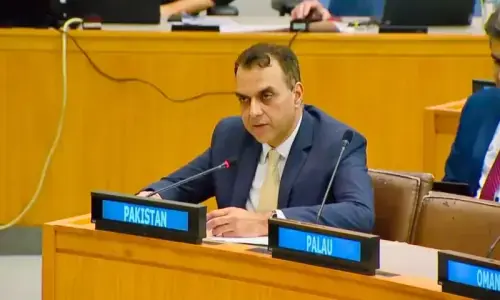
Hamid, who chaired the committee, said: “We have plugged all loopholes in the anti-honour killing legislation, which will be put up for approval at a joint sitting of parliament soon.”
Prime Minister Nawaz Sharif's ruling PML-N party has a large majority of seats in the lower house and the bills are believed to have enough backing from opposition parties to pass in the senate too.
A 2005 amendment to the law pertaining to honour killings prevented men who kill female relatives pardoning themselves as an “heir” of the victim.
But punishment was left to a judge's discretion when other relatives of the victim forgive the killer – a loophole which critics say is exploited.
According to Hamid, under the new law relatives of the victim would only be able to pardon the killer of capital punishment, but they would still face a mandatory life sentence of twelve-and-a-half years.
In the anti-rape bill, “a provision to conduct DNA tests on both the alleged victim and perpetrator has been added for the first time”, he said.
Rape of minors, as well as the mentally and physically ill, would become punishable by death.
Commenting on the move, Sughra Imam, a former senator from the opposition Pakistan People's Party who first tabled both bills, said: “No law will eradicate a crime entirely but the law should be a deterrent. Laws are supposed to guide better behaviour, not allow destructive behaviour to continue with impunity.”
Thursday's development came just six days after Baloch was strangled to death by her brother once again casting a spotlight on honour killing murders.